

Please fill in the form below !



rhinoplasty is an advanced surgical approach designed to reshape the nasal framework more comprehensively. In addition to improving overall nasal contour, structural rhinoplasty may address concerns such as a crooked, upturned, flat or low nose, or a broad nasal tip.
What is structural rhinoplasty, and how does it differ from more limited rhinoplasty techniques? This guide from EMCAS Aesthetic Hospital explains the procedure, candidacy, cost, surgical process and aftercare.
Structural rhinoplasty is a surgical approach that reshapes and reconstructs the nasal framework, including the bridge, tip and columella. Depending on the surgical plan, it may use autologous cartilage, a synthetic implant, or a combination of both.
The procedure aims to create a more refined and balanced nasal contour, with appropriate bridge and tip projection. It may be considered for concerns such as a crooked, flat or low nose, a broad nasal tip, or a previously operated nose that requires structural correction.
Because the surgical plan depends on each person’s nasal anatomy and goals, an in-person assessment is important. Contact EMCAS Aesthetic Hospital for a personalized consultation and treatment plan.
Read more: How Long Does Structural Rhinoplasty Take to Settle?

Structural rhinoplasty may be considered for both primary rhinoplasty and revision cases that require more extensive correction of the nasal framework. Common reasons for considering this approach include:
Read more: RHINOPLASTY TECHNIQUES COMMONLY USED TODAY
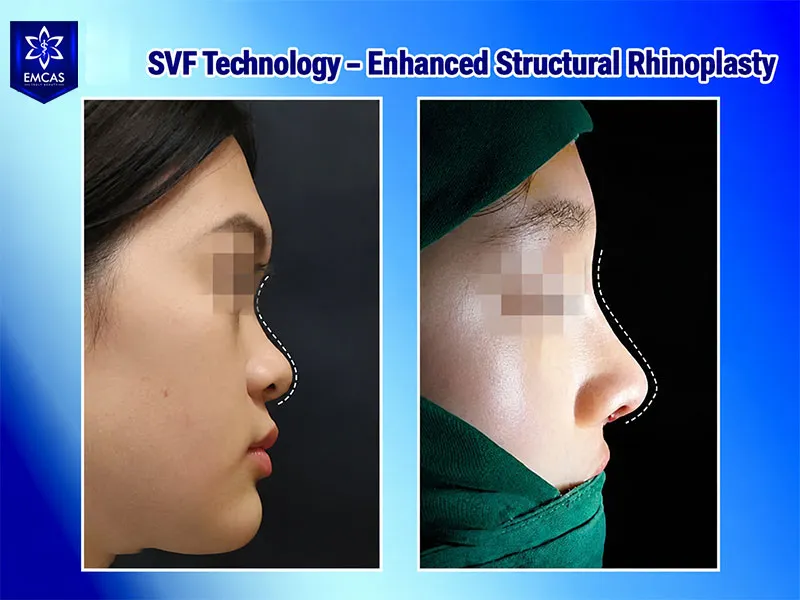
Cost is an important consideration when planning structural rhinoplasty. At EMCAS Aesthetic Hospital, structural rhinoplasty starts from VND 35 million.
The final cost depends on factors such as the cartilage or implant materials used and the complexity of the nasal structure. Contact EMCAS for an assessment and a quotation based on your individual treatment plan.
Read more: Rhinoplasty Cost: Pricing and Key Factors
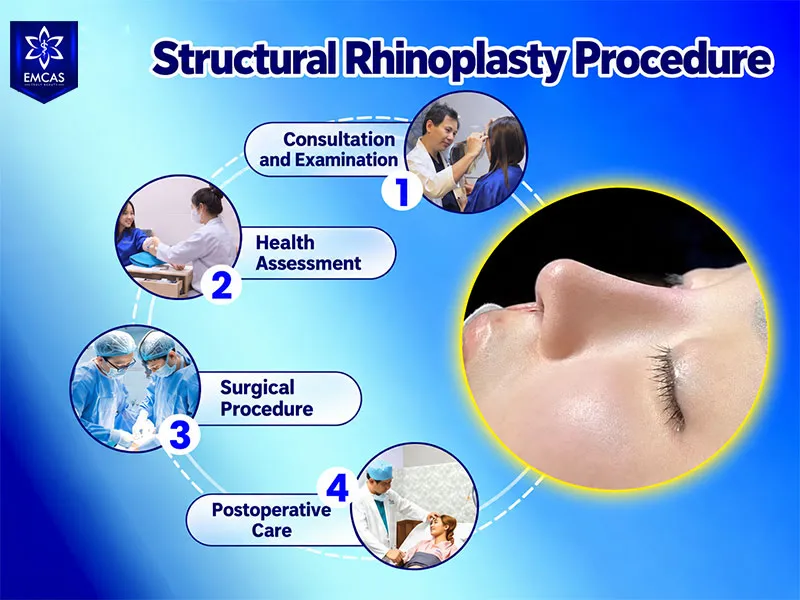
In addition to cost, many patients want to understand how rhinoplasty surgery is performed before deciding on treatment. At EMCAS Aesthetic Hospital, structural rhinoplasty follows the steps below:
The surgeon assesses your nasal anatomy, discusses your goals and recommends an individualized surgical plan. Morpheus 3D imaging may be used to help visualize the planned nasal shape and support treatment planning.
Before surgery, preoperative checks may include laboratory tests and an anesthesia assessment so the medical team can evaluate whether you are medically suitable for the procedure. Tell the team about any underlying medical conditions, medications or relevant medical history.
The nasal area is cleansed and prepared according to sterile surgical protocols. The anesthesia plan is determined by the medical team according to the procedure and your medical assessment to maintain comfort during surgery.
The surgeon measures facial proportions, determines the surgical access and performs the planned structural correction. The goal is to create a refined, balanced nasal contour that is proportionate to the face.
When possible, incisions are positioned discreetly. After the planned correction is completed, the incisions are carefully closed with sutures to help minimize visible scarring.
Before discharge, you are monitored at the hospital for the period recommended by the medical team. After returning home, follow the postoperative care instructions and attend scheduled follow-up visits so recovery can be assessed.
Each stage of the surgical pathway contributes to planning, perioperative care and postoperative follow-up. Understanding the process can also help you prepare for surgery and evaluate the surgical facility where the procedure will be performed.
Postoperative care plays an important role in healing and in the long-term stability of a rhinoplasty result. How long results last varies with the surgical technique, materials used, individual healing, natural aging and aftercare. Follow your surgeon’s instructions, including the general measures below:
Take medication exactly as prescribed. Keep the surgical area dry and clean it according to your surgeon’s instructions.
Avoid impact, pressure or unnecessary touching of the nose while it is healing. During the early recovery period, avoid heavy glasses that place pressure on the nasal bridge.
Keep the surgical area dry and clean it as instructed. Depending on healing and your surgeon’s plan, the splint may be removed after about 5–7 days and sutures may be removed at around 14 days.
Keep your head elevated while sleeping. Avoid sleeping on your side or stomach if this places pressure on the nose.
Avoid spicy foods, dust and strong odors if they trigger sneezing. If you experience frequent sneezing or are concerned about your recovery, contact the EMCAS care team.
Following the postoperative instructions provided by your surgeon is an important part of structural rhinoplasty recovery because healing can affect the final nasal contour.

If you are considering structural rhinoplasty and looking for a surgical facility in Ho Chi Minh City, EMCAS Aesthetic Hospital is one option to consider. EMCAS has more than 10 years of experience in aesthetic medical services.
Factors you may consider when evaluating EMCAS include:
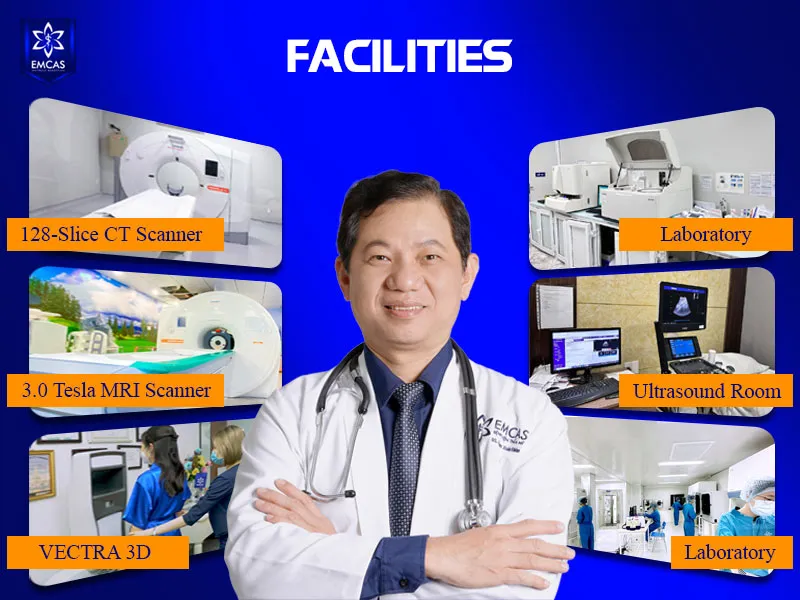
Medical imaging and diagnostic equipment used to support assessment and surgical planning, including Morpheus 3D imaging, a 3.0 Tesla MRI system, a 128-slice CT scanner, ultrasound facilities and laboratory services.
EMCAS operates under a Ministry of Health license for aesthetic surgical services.
Structural rhinoplasty is performed in an operating room using sterile technique and hospital surgical protocols.
At EMCAS, stromal vascular fraction (SVF) derived from autologous fat is used in selected protocols to support tissue recovery around the treated area.
The medical team includes surgeons with more than 25 years of experience and has performed thousands of aesthetic procedures, including structural rhinoplasty.
The hospital environment is designed to provide a clean and comfortable setting for patients.
The EMCAS medical and care teams provide consultation and support throughout the treatment journey.
EMCAS provides a pick-up and drop-off service in Ho Chi Minh City and 17 neighboring provinces and cities.
If you are considering structural rhinoplasty surgery, contact EMCAS for an individualized nasal assessment, surgical plan and quotation.
Because structural rhinoplasty reshapes and supports the nasal framework, it may be considered by people seeking a natural-looking contour that is proportionate to the face. Understanding the procedure, expected recovery and individual treatment plan can help you make a more informed decision.
We hope this guide from EMCAS Aesthetic Hospital has answered the key questions you may have about structural rhinoplasty.
Read more:
- Autologous Cartilage Rhinoplasty
- Explore Other Rhinoplasty Services at EMCAS
EMCAS AESTHETIC HOSPITAL
Address: 14/27 Hoang Du Khuong Street, Hoa Hung Ward, Ho Chi Minh City, Vietnam
Hotline: 0903082836 – 0979223636
Website: https://www.emcas.vn/index.php/en