

Please fill in the form below !




Ear cartilage rhinoplasty uses autologous cartilage harvested from the patient's ear to shape and cover the nasal tip. Depending on the surgical plan, it may be combined with rib cartilage or a synthetic implant to increase the height of the nasal bridge, while ear cartilage is used to provide additional coverage at the tip.
Approximately 2–3 cm of cartilage may be harvested from the auricular area. The cartilage is then prepared and shaped to suit the patient's nasal structure before being placed at the nasal tip. Because it is autologous tissue, ear cartilage is highly biocompatible and can help reduce concerns such as implant visibility, tip redness, rejection, or allergic reactions.
Ear cartilage can also provide long-term support and help create a softer, more natural-looking nasal tip. For this reason, auricular cartilage is one of the autologous materials that may be considered in structural rhinoplasty when additional nasal tip coverage is required.
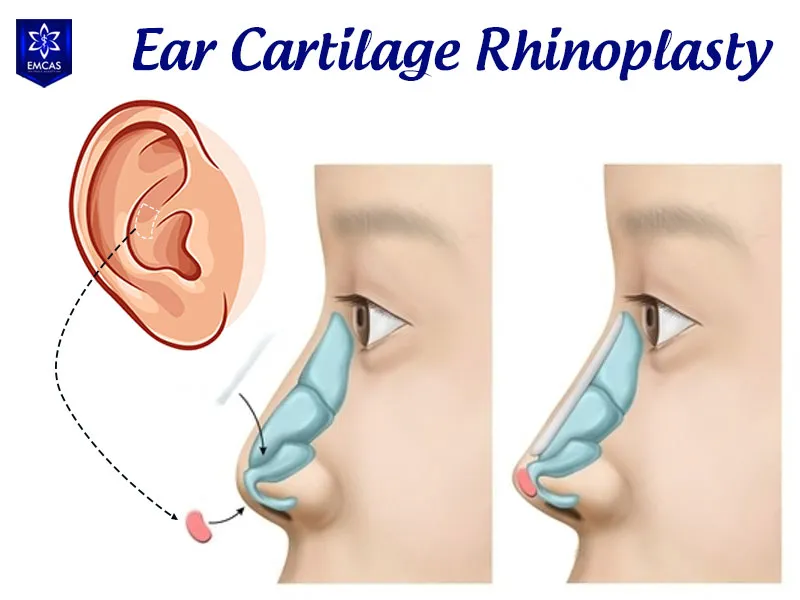
Ear cartilage rhinoplasty can provide long-lasting results when the procedure is performed with appropriate technique and followed by proper postoperative care. When ear cartilage is combined with rib cartilage as part of the rhinoplasty plan, the result may remain stable for many years and may potentially be maintained long term.
After ear cartilage rhinoplasty, the nose gradually settles as healing progresses. The nasal shape may become softer and more natural over approximately 3–6 months. The final course of healing can vary between individuals, so following your surgeon's aftercare instructions and scheduled follow-up visits remains important.
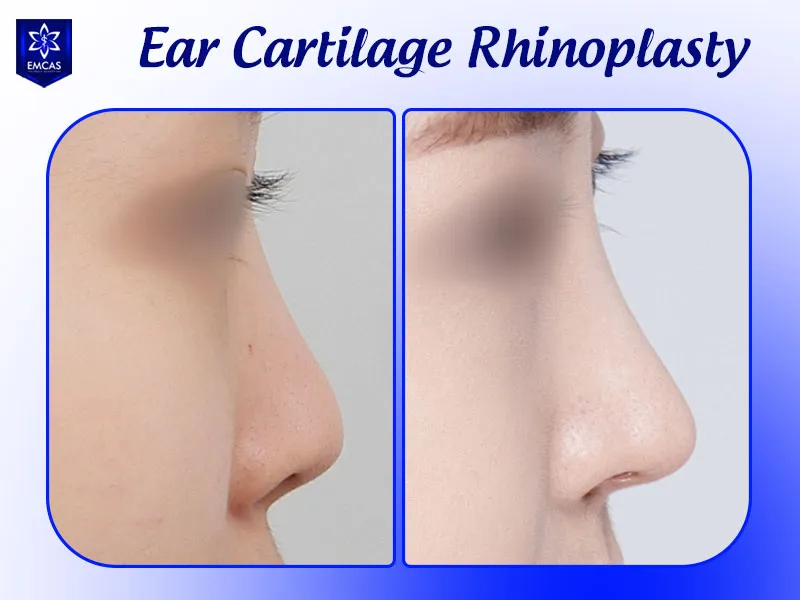
Ear cartilage rhinoplasty may be considered for people who want to improve nasal shape while using autologous cartilage as part of the surgical plan. Suitability should be determined by a surgeon after assessing the nasal structure, ear cartilage, general health, and aesthetic goals.
People undergoing rhinoplasty with a synthetic implant who may benefit from ear cartilage coverage at the nasal tip to help reduce concerns such as tip redness or implant visibility.
People who have previously undergone rhinoplasty and developed problems such as a visible implant contour or redness, where ear cartilage may be considered as part of a revision plan.
People in suitable general health with sufficient healthy ear cartilage available for graft harvesting.
People seeking a long-term rhinoplasty result who may be suitable for a surgical plan combining ear cartilage with rib cartilage.
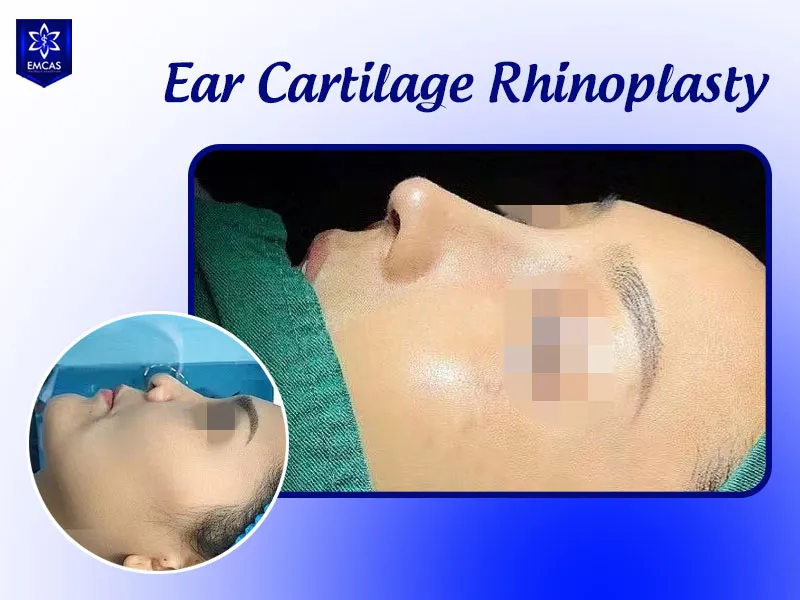
The cost of ear cartilage rhinoplasty can vary depending on the surgical plan, the condition of the nose, the materials used together with ear cartilage, and the degree of correction required.
At EMCAS Aesthetic Hospital, ear cartilage rhinoplasty starts from VND 25 million. The final treatment plan and exact cost are determined after consultation and examination.
The ear cartilage rhinoplasty process at EMCAS includes four main steps:
The surgeon examines the nasal structure and assesses the thickness and condition of the ear cartilage. Your aesthetic goals are also discussed to determine whether ear cartilage is appropriate for your surgical plan. Morpheus 3D imaging may be used to help visualize the proposed nasal shape.
Based on the assessment, the surgeon develops an individualized nasal design and explains the planned procedure, expected result, and treatment cost.
Before surgery, you undergo the required preoperative assessments, which may include blood tests, an electrocardiogram, and anesthesia-related evaluation. These checks help the medical team determine whether you are medically suitable to proceed with rhinoplasty.
Anesthesia is administered according to the surgical plan so that the procedure can be performed comfortably.
The surgeon first harvests ear cartilage through a small incision behind the ear. The harvested cartilage is then prepared and shaped before being placed at the nasal tip.
Depending on the patient's nasal structure and treatment plan, rib cartilage or a synthetic implant may also be used to increase bridge projection. Ear cartilage is used to provide additional soft-tissue coverage at the nasal tip and help reduce concerns such as implant visibility or tip redness.
The surgical incisions are then closed with sutures, and the nose is supported with an appropriate splint to help maintain the planned shape during the early healing period.
After surgery, you remain at the hospital for monitoring for several hours before discharge as appropriate. At home, follow your surgeon's aftercare instructions, take prescribed medication as directed, and attend scheduled follow-up appointments.

Ear cartilage rhinoplasty uses autologous cartilage from the patient's own body, which can help reduce concerns related to foreign-material rejection, allergy, implant visibility, or tip redness. However, it is still a surgical procedure, and appropriate surgical technique and postoperative care are important. Follow your surgeon's instructions and attend scheduled follow-up visits.
No. Ear cartilage that has been harvested for rhinoplasty does not grow back because the removed cartilage does not regenerate. Only a limited amount of cartilage is harvested, and the donor site is closed with sutures to help minimize visible scarring and preserve the shape and function of the ear.
Ear cartilage rhinoplasty is an option for patients who require autologous cartilage to shape or provide additional coverage for the nasal tip. Depending on the nasal structure and treatment plan, ear cartilage may be combined with rib cartilage or a synthetic implant to achieve the intended nasal contour.
Contact EMCAS Aesthetic Hospital for an examination and consultation to determine whether ear cartilage rhinoplasty is appropriate for your nasal anatomy and aesthetic goals.
EMCAS AESTHETIC HOSPITAL
Address: 14/27 Hoang Du Khuong Street, Hoa Hung Ward, Ho Chi Minh City, Vietnam
Hotline: 0903082836 – 0979223636
Website: https://www.emcas.vn/en