

Please fill in the form below !




Revision rhinoplasty is a corrective procedure for a nose that has developed complications or an unsatisfactory result after previous rhinoplasty. If you notice signs of a complication after nose surgery, contact EMCAS Aesthetic Hospital for an assessment and an individualized treatment plan.
Problems after revision rhinoplasty can be challenging because a patient who undergoes nose surgery to improve appearance or function may sometimes experience an unsatisfactory result or a postoperative complication.
Possible causes include surgical technique, the type or size of implant or graft material used, improper postoperative care, trauma during recovery, or individual tissue responses to implanted materials.
An unsatisfactory rhinoplasty result can affect not only appearance but also confidence and, in some cases, nasal function. Reducing risk begins with choosing an appropriately qualified surgeon and a licensed medical facility, understanding the planned technique, and following postoperative instructions.
If you experience an unexpected problem after rhinoplasty, EMCAS Aesthetic Hospital can assess the condition and discuss an appropriate corrective plan based on the nasal structure, previous procedure, current symptoms, and your goals.
Learn more: What is rhinoplasty? Read about the procedure, recovery, risks, and cost at EMCAS.
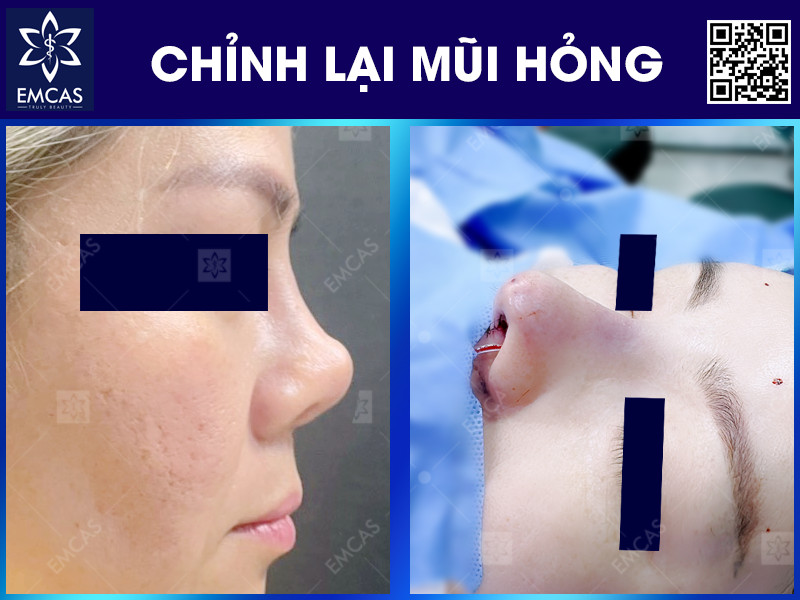
Risk may increase when surgery is performed without appropriate medical expertise, unsuitable materials are used, sterile conditions are inadequate, or postoperative care is not followed properly. Some patients may also experience irritation or an adverse tissue response to implanted material.
These problems may be related to an implant or graft that is not well matched to the nasal anatomy, excessive pressure on the nasal tip, healing changes, or other structural factors. In more severe cases, progressive skin thinning can increase the risk of implant exposure or tissue damage.
Complications may occur when injections are performed under inadequate sterile conditions, by an unqualified injector, with incorrect technique, or with unverified products. Vascular injection is another potentially serious injection-related complication that requires prompt medical assessment.
To reduce avoidable risks, rhinoplasty and management of postoperative complications should be performed at an appropriately licensed medical facility with suitable surgical equipment and clinicians experienced in nasal surgery.

Learn more: How much does rhinoplasty cost? See the current rhinoplasty pricing information and factors that may affect cost at EMCAS.


Based on the examination, the surgeon discusses the corrective options and recommends an approach suited to your anatomy and current condition.
The first priority is to address the cause of the problem, such as infection-related tissue issues, implant displacement, structural deformity, or problematic injected material when applicable.
After the affected area has been managed, the surgeon reconstructs or reshapes the nose according to the treatment plan. Depending on the nasal condition and reconstructive needs, autologous cartilage from the ear, nasal septum, or rib may be considered.
Revision rhinoplasty can be more complex than primary rhinoplasty. According to the current EMCAS protocol described on this service page, surgery may take around two hours and an overnight hospital stay may be recommended. Actual operative time and length of stay depend on the complexity of the case and the surgeon's assessment.
After revision rhinoplasty at EMCAS Aesthetic Hospital, return to work and daily activities depends on the extent of surgery and your recovery. Follow your surgeon's instructions and keep scheduled follow-up appointments. Key aftercare points include:
Rhinoplasty services at EMCAS:
EMCAS AESTHETIC HOSPITAL
Address: 14/27 Hoang Du Khuong Street, Hoa Hung Ward, Ho Chi Minh City, Vietnam
Hotline: 0903 082 836 – 0979 223 636
Website: https://www.emcas.vn/