



Please fill in the form below !

Rhinoplasty aftercare is an important part of recovery and can influence how the nose heals and settles after surgery. While surgical technique and the surgeon’s expertise matter, the first several days also require careful wound care and protection of the healing nasal structures. In this guide, EMCAS Aesthetic Hospital explains practical steps for cleaning the surgical area, supporting recovery through nutrition, adjusting daily activities and recognizing when follow-up care is needed.
How to Care for the Surgical Wound After Rhinoplasty
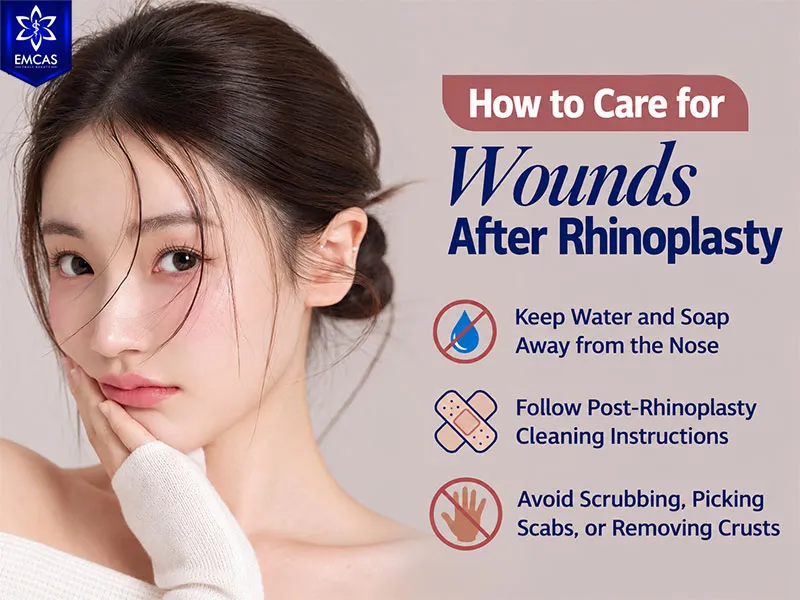
After rhinoplasty, proper wound hygiene can help reduce avoidable problems with the incision while your nose heals. Patients often have questions about cleaning the surgical area and caring for the nose before and after suture removal.
The following guidance outlines common wound-care precautions. Your surgeon’s individual instructions should take priority because incision sites, dressings and recovery needs differ between procedures.
- During the first 48 hours, keep the operated nasal area dry and avoid direct contact with water or soap unless your surgeon instructs otherwise. When showering or washing your hair, take precautions to prevent water from reaching the incision or dressing.
- Clean only the areas your surgical team has told you to clean. If saline and cotton swabs are recommended, use them gently, wiping outward as instructed without pressing on the nose.
- Do not scrub the wound or pick at scabs. Scabs form during healing, and removing them prematurely may injure the delicate tissue underneath and contribute to irritation or scarring.
A follow-up visit is commonly arranged around days 5–7. At that appointment, the surgeon can assess healing, check the incision and determine whether and when any sutures should be removed. Good rhinoplasty aftercare involves more than cleaning: it also means protecting the healing tissues and following the care plan as swelling gradually improves.
Diet and Nutrition to Support Rhinoplasty Recovery
After rhinoplasty, the body begins repairing the tissues affected by surgery. Wound healing involves immune responses, blood supply, connective tissue and skin cells. A balanced diet provides the energy and nutrients needed for these processes.
Adequate nutrition can support normal tissue repair and overall recovery, although food alone cannot guarantee faster healing or prevent complications. What should you eat, which foods may need to be limited, and how should you manage fluids after surgery?
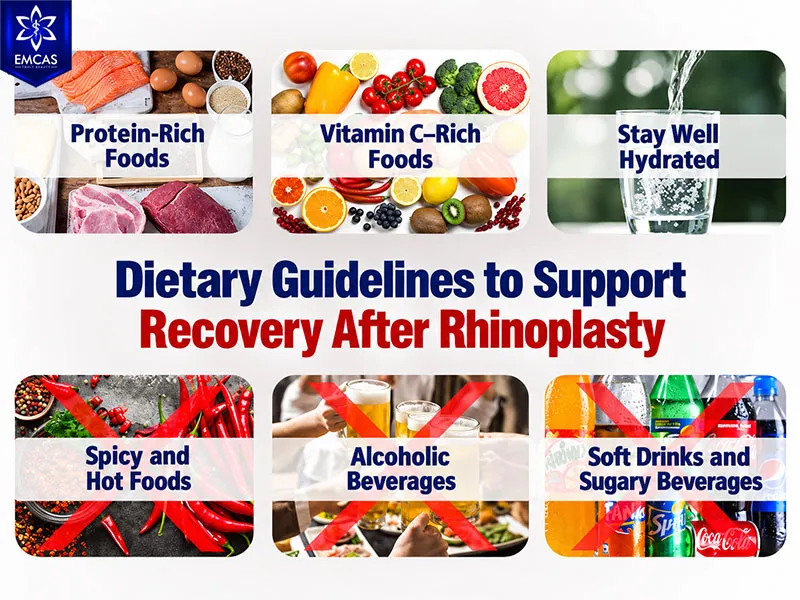
1. Prioritize Protein and Nutrients Involved in Tissue Repair
Protein supplies amino acids that the body uses to build and repair tissue, including collagen involved in wound healing. Eating adequate protein is therefore an important part of recovery nutrition.
Vitamin C, zinc and iron also play roles in normal tissue repair and immune function. Aim for a varied diet that provides these nutrients, following any personalized dietary advice from your healthcare team.
Read more: What to Eat After Rhinoplasty during the first week of recovery.
2. Limit Foods or Substances That May Cause Problems for You
Some postoperative instructions may recommend avoiding certain foods, such as beef, seafood, sticky rice or spicy dishes, particularly if you have allergies, sensitivities or specific medical restrictions. These foods should not automatically be assumed to cause excessive scar tissue or persistent swelling in everyone. Follow your surgeon’s advice about your own diet. Avoid smoking, and limit or avoid alcohol during early recovery as instructed by your medical team.
3. Stay Hydrated and Limit Sugary Drinks
Adequate fluid intake supports normal body functions during recovery. Around 1.5–2 liters of fluids per day may be a useful general reference for some adults, but individual needs vary with health conditions, diet and medical advice. Choose water regularly, and limit heavily sweetened drinks such as soda or milk tea as part of a balanced recovery diet.
Daily Activities and Precautions After Rhinoplasty
Daily habits during rhinoplasty recovery can affect comfort and the healing nasal structures. Concerns such as changes in nasal alignment, fluid collection or prolonged nasal-tip swelling may need medical assessment and cannot always be attributed to daily habits alone. Nevertheless, sleeping positions, bending forward and pressure from glasses are practical precautions to discuss with your surgeon.
The following adjustments can help protect the operated area during early recovery:
1. Sleep in a Protective Position
- Sleep on your back with your head elevated during the first 7–10 days, or for the period recommended by your surgeon, to help manage swelling and avoid pressure on the nose.
- Avoid sleeping on your side or face down during the early healing period; your surgeon may recommend continuing these precautions for about a month.
2. Avoid Strenuous Physical Activity
- Avoid running, strenuous workouts, repeated bending and heavy lifting for approximately 2–4 weeks, or until your surgeon clears you to resume these activities.
- Protect your nose from bumps, impact and direct pressure.
3. Follow Your Nose-Cleaning Instructions
- If recommended, clean the instructed areas gently with a saline-moistened cotton swab according to your surgeon’s directions.
- Avoid forceful washing and applying cosmetics directly to the healing nasal area during the initial recovery period.
4. Avoid Pressure From Glasses
Do not wear glasses that rest directly on the nasal bridge for approximately 1–2 months unless your surgeon advises otherwise. Pressure from the frames may interfere with healing, especially when the nasal framework has been modified.
What to Watch for During the First Week After Rhinoplasty
The first seven days after rhinoplasty are an important stage of initial wound healing. Swelling and bruising are common, and the operated tissues need protection while the nose begins to recover. Careful observation and adherence to postoperative instructions are especially important during this period.
Four aspects of the early recovery period deserve attention:
1. Swelling Is Common, but Changes Should Be Monitored
Swelling, tightness and some discomfort around the nose are common soon after surgery as part of the body’s normal healing response. Swelling usually improves gradually, although the pace varies. Contact your surgical team if symptoms become worse rather than better or seem unusual for your recovery plan.
2. Protect the Nose From Impact and Pressure
An accidental bump, repeated touching or excessive pressure during sleep can irritate healing tissues and, in some cases, affect the position of cartilage grafts or implants. Because the nasal structures are still healing, avoid unnecessary manipulation or pressure and follow any procedure-specific restrictions from your surgeon.
3. Anxiety About Early Changes Is Understandable
During the first 3–5 days, some patients become concerned about swelling, bruising or how the nasal tip looks. The appearance of the nose can change during recovery, so early swelling does not necessarily reflect the final result. However, increasing redness, severe or worsening pain, fever, or unusual drainage should not be dismissed as a normal cosmetic change; seek advice from your surgical team.
4. Attend the Scheduled Follow-Up Around Days 5–7
At the follow-up visit, the surgeon can assess wound healing, look for early complications, review medications and provide updated instructions. Whether sutures or a splint are removed at this visit depends on the procedure and the surgeon’s assessment.
Rhinoplasty aftercare is an ongoing process rather than a few days of cleaning or dietary restrictions. Following instructions, protecting the nose and attending follow-up appointments are important parts of recovery. The final nasal contour develops gradually, and individual healing times vary.

At EMCAS Aesthetic Hospital, postoperative care includes initial monitoring, follow-up appointments and individualized recovery guidance. If you have questions about caring for your nose after surgery, contact the EMCAS medical team for guidance based on your procedure.
Read more: What Is Rhinoplasty? Learn about the procedure, recovery and potential risks at EMCAS.
EMCAS AESTHETIC HOSPITAL
Address: 14/27 Hoang Du Khuong Street, Hoa Hung Ward, Ho Chi Minh City, Vietnam
Hotline: 0903082836 – 0979223636
Website: https://www.emcas.vn/en
