


Please fill in the form below !

What to eat after rhinoplasty is a common concern for people considering or recovering from rhinoplasty. In addition to the procedure itself and your surgeon's expertise, nutrition during the early recovery period also deserves attention because your body needs adequate nutrients to support healing. So, what foods should you eat after rhinoplasty, and how can you plan your meals during the first week? This guide from EMCAS Aesthetic Hospital explains what to consider.
What Should You Eat After Rhinoplasty?
What to eat after rhinoplasty is an important consideration during early recovery. To support your general health and provide your body with the nutrients it needs while healing, aim for a balanced and nutrient-rich diet.
During the first few days, soft and easy-to-digest foods can be more comfortable, particularly when you want to minimize unnecessary chewing. Vegetables and fruit can also provide vitamins, minerals and fiber as part of a balanced recovery diet.
Some food groups you can include after rhinoplasty are:
-
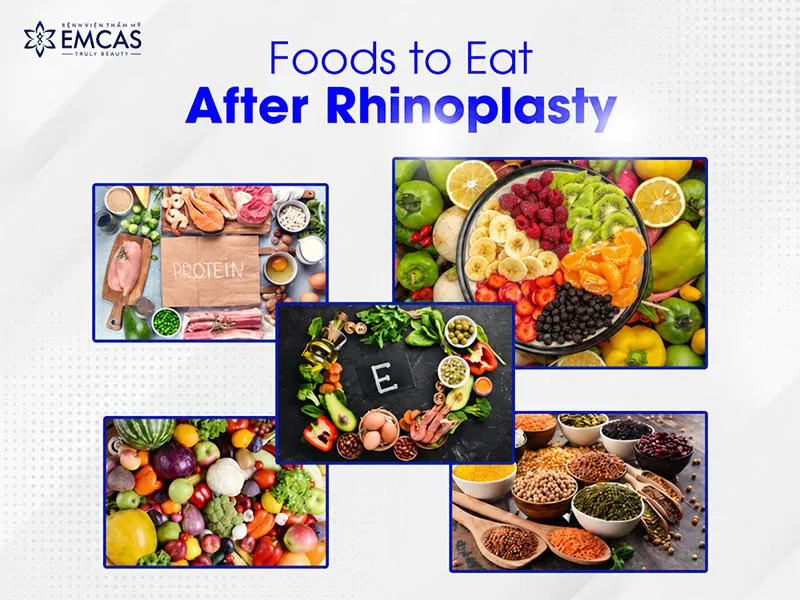
Protein-rich foods: Protein provides building blocks that the body uses for tissue repair. Sources include lean meat, fish, eggs and dairy products.
-
Foods rich in vitamins and minerals: Fruit, vegetables and whole grains can help provide micronutrients needed during recovery. Foods containing vitamins C and E can be included as part of a varied, balanced diet.
-
Fiber-rich foods: Fiber supports normal digestive function and may help reduce constipation. Sources include fruit, vegetables and whole grains.
-
Fruit: Options such as pineapple, papaya, oranges, grapefruit, apples, pears, grapes and bananas can add vitamins, minerals and variety to your diet. If your surgeon has given you specific food restrictions during early recovery, follow those individualized instructions.
-
Stay well hydrated: Drink enough fluids throughout the day unless your doctor has advised you to restrict your fluid intake.
These food groups can help you build a practical post-rhinoplasty diet based on your usual eating habits, nutritional needs and your surgeon's postoperative instructions.
7-Day Meal Plan After Rhinoplasty
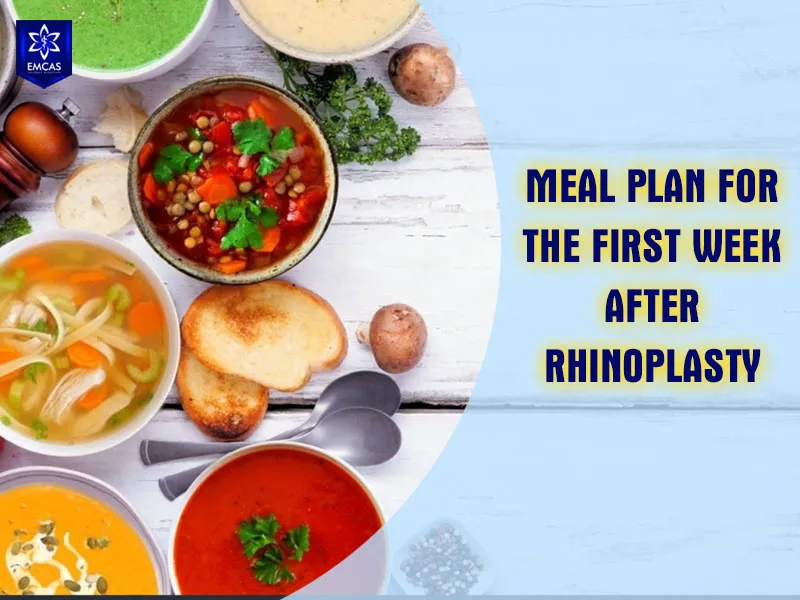
During the first few days after rhinoplasty, your body needs adequate energy, protein and micronutrients to support recovery. Choosing soft, nutrient-dense foods can also make eating more comfortable while your nose and surrounding tissues are still healing.
The following 7-day rhinoplasty recovery meal plan focuses on soft foods, lean protein, vegetables, fruit and fluids. It is intended as a practical meal-planning reference and can be adjusted to your preferences, dietary needs and your surgeon's instructions.
Day 1: Choose liquids and soft foods to minimize chewing
- Plain rice porridge with salmon, minced pork congee, or soup
- Drink adequate fluids throughout the day; around 2–2.5 liters may be suitable for some adults unless your doctor has advised otherwise
- Fruit or vegetable juice such as orange, carrot or grapefruit juice
Day 2: Continue with soft foods and add more protein
- Minced pork congee or brown rice porridge with pumpkin
- Steamed red tilapia with ginger and sweet leaf soup with lean pork
- Fruit such as grapes, strawberries, avocado or pineapple for dessert
Day 3: Gradually add more variety
- Lotus seed porridge, white rice or brown rice
- Carrot soup or spinach soup
- Boiled chicken
- Lightly seasoned braised mackerel
- Fruit or juice such as apple, dragon fruit, orange or mandarin
Day 4
- Whole-grain bread or soft rice
- Boiled lean meat and sweet leaf soup
- Pork bone and carrot soup
- Strawberries, kiwi or yogurt for dessert
Day 5
- Soft macaroni with minced meat
- White rice, stir-fried pork with vegetables and Malabar spinach soup
- Seaweed soup with lean meat and boiled greens
- Yogurt for dessert
Day 6
- Mung bean porridge with lean meat
- Rice with steamed fish and mustard green soup
- Glass noodle soup with skinless chicken breast and mushrooms
- Avocado smoothie, grapefruit or yogurt for dessert
Day 7
- Vegetable salad
- Rice, pan-seared salmon and bottle gourd soup
- Pork bone soup with root vegetables
- Watermelon or papaya for dessert
What Should You Keep in Mind During the First Few Days After Rhinoplasty?
The first few days after rhinoplasty are an important part of recovery because the operated tissues are still healing and the nasal structure has not yet fully stabilized. In addition to planning an appropriate recovery diet, follow your postoperative care instructions carefully to protect the surgical area and reduce avoidable complications.
-
Follow your surgeon's instructions: Your surgeon will explain how to care for the surgical area and how to use any prescribed medications. Follow these instructions carefully and attend scheduled follow-up appointments so your recovery can be assessed and your care adjusted when necessary.
-
Use a cool compress as instructed: During the early recovery period, a cool compress may help with swelling and bruising. Avoid placing ice or pressure directly on the operated nose. Apply the compress to the cheeks or under-eye area according to your surgeon's instructions.
-
Get adequate rest: Give your body time to recover and avoid staying up late, overworking or strenuous physical activity. During early recovery, sleep on your back with your head elevated and avoid sleeping face down or placing pressure on the nose.
-
Avoid touching or putting pressure on your nose: Do not rub, press, twist or manipulate the nose during the first week after surgery. Avoid placing pressure from glasses on the nasal bridge for at least 2–4 weeks or until your surgeon says it is safe.
-
Follow your postoperative diet: Eat a balanced diet that provides adequate protein, vegetables, fruit and fluids. Avoid spicy foods and alcohol during early recovery. If your surgeon has given you additional food restrictions, including specific foods to avoid, follow those individualized instructions.
-
Change dressings only as instructed: Follow your surgeon's instructions regarding dressings and wound care to help keep the surgical area clean and dry.
Postoperative care plays an important role in supporting recovery after rhinoplasty. Along with wound care, rest and follow-up appointments, a balanced rhinoplasty recovery diet can help provide the nutrients your body needs during the healing process.
If you are still wondering what to eat after rhinoplasty, focus on nutrient-rich foods that are comfortable to eat and follow any specific dietary instructions provided by your surgeon. EMCAS Aesthetic Hospital hopes this guide helps you plan practical meals during the early stages of recovery.
EMCAS AESTHETIC HOSPITAL
Address: 14/27 Hoang Du Khuong Street, Hoa Hung Ward, Ho Chi Minh City, Vietnam
Hotline: 0903 082 836 – 0979 223 636
Website: https://www.emcas.vn/