



Please fill in the form below !

There are many different rhinoplasty techniques available today, ranging from surgical approaches using cartilage or implants to nonsurgical options. Each approach has its own indications, benefits, limitations, and recovery considerations. This guide from EMCAS Aesthetic Hospital explains five common types of rhinoplasty to help you understand how they differ and discuss an appropriate option with a qualified surgeon.
What Are the Different Types of Rhinoplasty? 5 Common Options
Rhinoplasty can be performed using different techniques depending on a person's nasal anatomy, aesthetic goals, and the degree of correction required. Broadly, the options discussed in this article can be grouped into surgical rhinoplasty and nonsurgical rhinoplasty.
Understanding the differences between these rhinoplasty techniques can help you have a more informed discussion with your surgeon about which approach may be appropriate for your nose and facial proportions.
Autologous Cartilage Rhinoplasty
Among common surgical approaches, autologous cartilage rhinoplasty uses cartilage harvested from the patient's own body. Depending on the treatment plan and nasal structure, cartilage may be obtained from the rib, nasal septum, ear, or a combination of these donor sites.
Because the graft comes from the patient's own body, autologous cartilage is generally well tolerated and may reduce concerns related to allergy or rejection of foreign materials. However, rhinoplasty remains a surgical procedure and risks such as infection and other postoperative complications are still possible.
Autologous cartilage can be used to modify nasal height, shape, and structural support, with the goal of creating a balanced and natural-looking nasal contour.

Rhinoplasty With Synthetic Implants
Rhinoplasty with synthetic implants is another commonly used approach. A synthetic implant may be placed to increase nasal bridge projection and help reshape the nasal contour according to the surgical plan.
Synthetic materials used for rhinoplasty may include medical-grade silicone and other biocompatible implant materials. Surgiform is also used in selected rhinoplasty procedures. Depending on the patient's anatomy, autologous cartilage such as ear cartilage may be added to provide coverage or support around the nasal tip.
As with other rhinoplasty techniques, synthetic implants carry potential risks, including infection, implant visibility, displacement, allergy, or rejection. Choosing an appropriately qualified surgical facility and following postoperative care instructions are important parts of reducing avoidable risks.
Structural Rhinoplasty
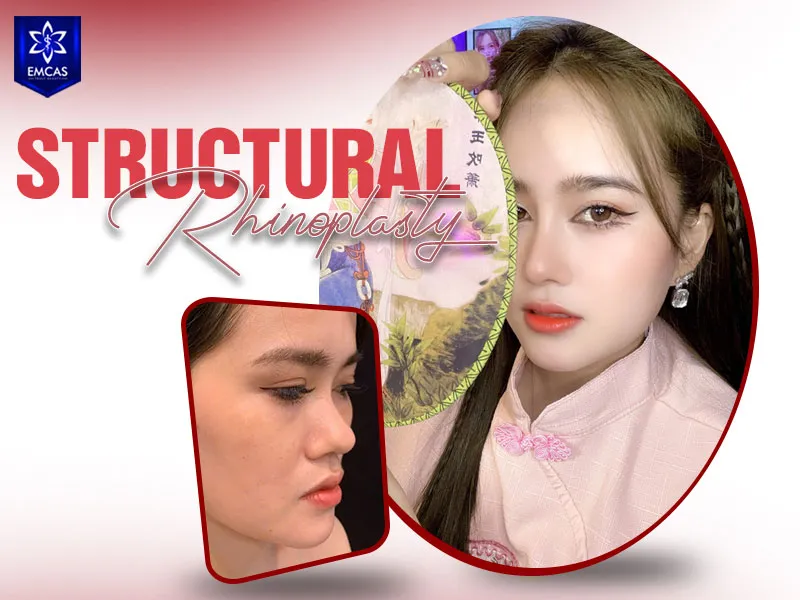
Structural rhinoplasty is a surgical approach that reshapes and reconstructs the nasal framework to improve the overall nasal contour. It can involve the bridge, tip, columella, and other structural components of the nose depending on the individual treatment plan.
Structural rhinoplasty may be considered for concerns such as a broad nasal tip, flat or low bridge, upturned nose, deviation, or problems following previous rhinoplasty. Depending on the anatomy and correction required, the procedure may use autologous cartilage, a synthetic implant, or a combination of both.
The appropriate structural technique depends on the existing nasal framework and the patient's goals, so an in-person assessment is required before a surgical plan can be determined.
SVF Rhinoplasty
Among the rhinoplasty approaches available at EMCAS, SVF rhinoplasty uses stromal vascular fraction (SVF) derived from the patient's own fat as an adjunct to rhinoplasty. Depending on the treatment plan, it may be combined with autologous cartilage, a synthetic implant, or both to modify the nasal bridge and tip.
At EMCAS, SVF is used as part of selected rhinoplasty protocols with the aim of supporting tissue recovery around the treated area. The technique and materials used are determined after assessment of the patient's nasal anatomy, tissue condition, and treatment goals.
To learn more about SVF rhinoplasty and whether it may be appropriate for your case, contact EMCAS Aesthetic Hospital for an examination and individualized consultation.

Nonsurgical Rhinoplasty
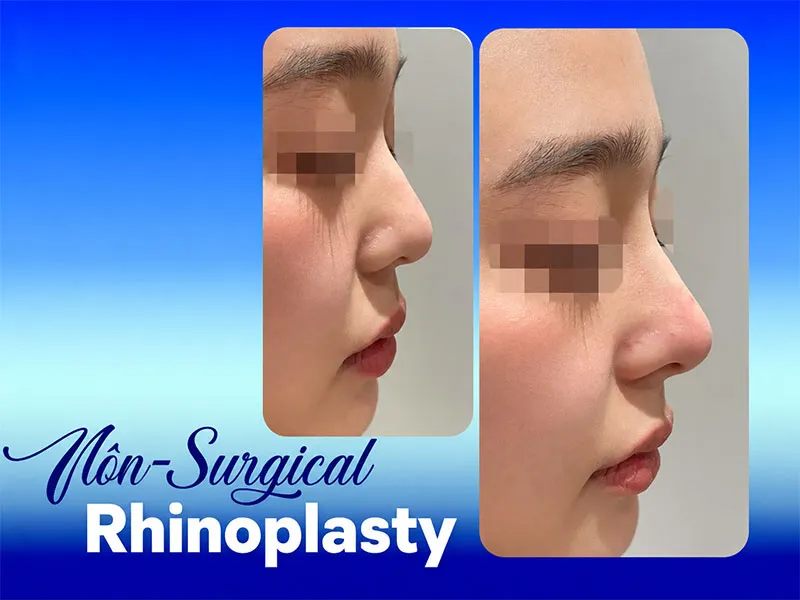
In addition to surgical rhinoplasty, nonsurgical approaches may be considered for selected aesthetic concerns that do not require structural surgery. Depending on the treatment plan, options may include thread-based techniques, dermal filler, or autologous fat grafting.
Nonsurgical rhinoplasty is generally more suitable for limited contour changes rather than major structural correction. The appropriate approach depends on the condition of the nose and the patient's goals and should be determined after professional assessment.
These approaches are typically less invasive and involve shorter recovery than surgery. Depending on the method, individual response, and aftercare, the aesthetic effect may last approximately 6–12 months.
Comparison of Common Rhinoplasty Techniques
Different rhinoplasty techniques have different advantages, limitations, materials, and treatment costs. The most appropriate approach depends on factors such as nasal anatomy, the degree of correction required, previous procedures, and individual aesthetic goals.
Some noses may require particularly careful evaluation before further treatment, including cases with very thin skin or a history of multiple previous nasal procedures that may have affected the underlying structure or soft-tissue coverage.
The table below compares the five rhinoplasty options discussed above in terms of their main advantages, limitations, materials, and reference pricing at EMCAS.
|
Rhinoplasty Type
|
Advantages
|
Limitations
|
Materials Used
|
Starting Price
|
|
Autologous cartilage rhinoplasty
|
High biocompatibility, reduced concerns related to foreign-material allergy or rejection, natural-looking contour, long-term structural support
|
Higher cost and generally longer procedure time
|
Autologous cartilage from the rib, ear, or nasal septum
|
From VND 25 million
|
|
Rhinoplasty with synthetic implants
|
More accessible cost, effective bridge augmentation, and clearly defined nasal projection
|
Potential risks include allergy, rejection, displacement, or implant visibility
|
Synthetic implant; ear cartilage may also be used for nasal tip coverage in selected cases
|
From VND 23 million
|
|
Structural rhinoplasty
|
Allows more comprehensive correction of the nasal framework and may combine autologous cartilage with synthetic materials
|
Higher cost and greater technical complexity
|
Autologous cartilage, synthetic implant, or a combination of both
|
From VND 35 million
|
|
SVF rhinoplasty
|
Combines rhinoplasty with an autologous fat-derived adjunct used in selected protocols to support tissue recovery
|
Requires fat harvesting and additional SVF processing
|
Autologous cartilage, synthetic implant, or both, combined with stromal vascular fraction derived from autologous fat
|
From VND 17 million
|
|
Nonsurgical rhinoplasty
|
Less invasive, relatively convenient, and generally involves shorter recovery
|
Temporary results and limited ability to correct major structural concerns
|
May use threads, dermal filler, or autologous fat rather than cartilage
|
Depends on the selected method |
This comparison can help you understand the main differences between common rhinoplasty options. However, price or technique alone should not determine treatment. Nasal anatomy, medical suitability, the surgeon's assessment, and the standards of the medical facility should also be considered.
Read more: How Much Does Rhinoplasty Cost? Reference Pricing and Key Factors
Which Type of Rhinoplasty Is the Safest?
There is no single rhinoplasty technique that is the safest option for everyone. Different surgical and nonsurgical approaches have different indications, limitations, and potential risks.
Safety depends on several factors, including whether the procedure is appropriate for your nasal anatomy and health condition, the surgeon's qualifications and experience, the standards of the medical facility, the materials and technique used, and appropriate postoperative care.
Because not everyone is suitable for every approach, an in-person medical assessment is important before deciding on treatment. At EMCAS Aesthetic Hospital, the medical team evaluates each case and recommends a rhinoplasty plan based on the patient's nasal anatomy and treatment goals.
EMCAS uses Morpheus 3D imaging to support consultation and treatment planning and to help patients visualize a proposed nasal shape. The simulation is a planning aid rather than a guarantee of the final surgical result. The EMCAS medical team includes surgeons with more than 25 years of experience in aesthetic procedures and continues to apply individualized planning to rhinoplasty cases.

To discuss which approach may be suitable for your case, contact EMCAS Aesthetic Hospital at 0903 082 836 or 0979 223 636. Our team can provide information and support before, during, and after rhinoplasty treatment.
Understanding the different types of rhinoplasty can help you compare available techniques more clearly. The appropriate option ultimately depends on your nasal anatomy, medical suitability, and treatment goals and should be determined with a qualified surgeon.
EMCAS AESTHETIC HOSPITAL
Address: 14/27 Hoang Du Khuong Street, Hoa Hung Ward, Ho Chi Minh City, Vietnam
Hotline: 0903 082 836 – 0979 223 636
Website: https://www.emcas.vn/