



Please fill in the form below !

Nonsurgical rhinoplasty is an option for people who want subtle changes to the shape of their nose without conventional rhinoplasty surgery and with less downtime. Depending on the technique, treatment may involve threads, dermal fillers or autologous fat grafting. In this article, EMCAS Aesthetic Hospital explains what nonsurgical rhinoplasty is, the methods commonly used, who may be suitable and what to consider before treatment.
What is nonsurgical rhinoplasty?
Nonsurgical rhinoplasty refers to minimally invasive aesthetic techniques used to make modest changes to the contour of the nose without conventional structural rhinoplasty surgery. The approaches described in this article include biocompatible threads, autologous fat grafting and dermal fillers to refine selected areas of the nose.
Compared with surgical rhinoplasty, these techniques generally involve a shorter procedure and less downtime. They may be suitable for people who want to address relatively minor concerns without making major changes to the underlying nasal structure.
However, the results are generally not as long-lasting as those of surgical rhinoplasty. Depending on the material used and individual factors, the duration of the results described for these techniques may range from approximately 6 to 24 months.
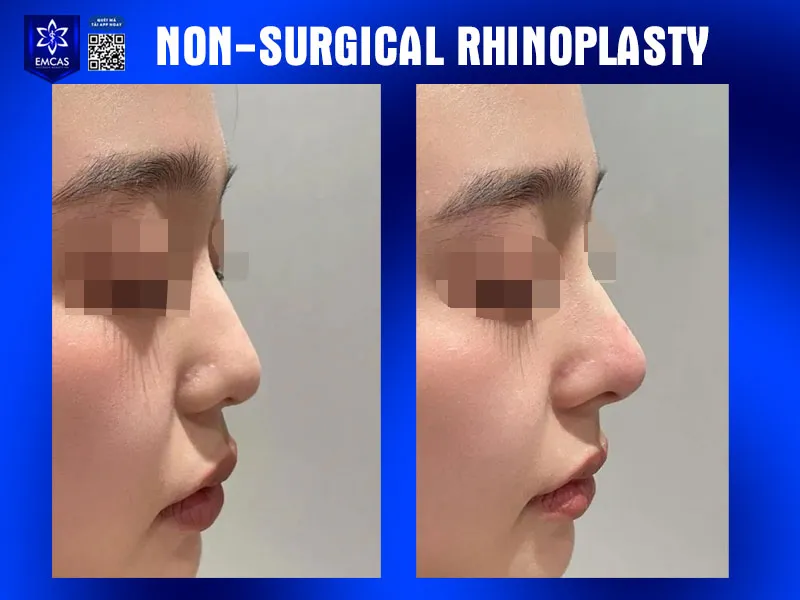
What makes a nose aesthetically balanced?
An aesthetically balanced nose is one that complements the overall proportions of the face. Features such as the height and contour of the bridge, the shape of the nasal tip and symmetry between both sides can all influence how the nose appears in relation to other facial features.
There is no single nose shape that is ideal for everyone. Aesthetic assessment should take individual facial proportions into account rather than evaluating the nose in isolation, with the aim of maintaining a natural appearance and the person's individual facial characteristics.
If you are considering an aesthetic procedure for the nose, consult a qualified doctor and carefully consider your options before deciding. For people with relatively minor concerns who do not require major structural correction, a nonsurgical approach may be considered after medical assessment.
Benefits of nonsurgical rhinoplasty
Nonsurgical rhinoplasty has become increasingly popular for several practical reasons, including:
- No conventional rhinoplasty surgery is required.
- The procedure can generally be performed within a relatively short period of time.
- Downtime is generally shorter than with surgical rhinoplasty.
- Changes to the nasal contour can usually be seen soon after treatment.
- Costs may be lower than those associated with conventional rhinoplasty surgery.
- It may be considered by people seeking subtle or temporary changes before committing to surgery.
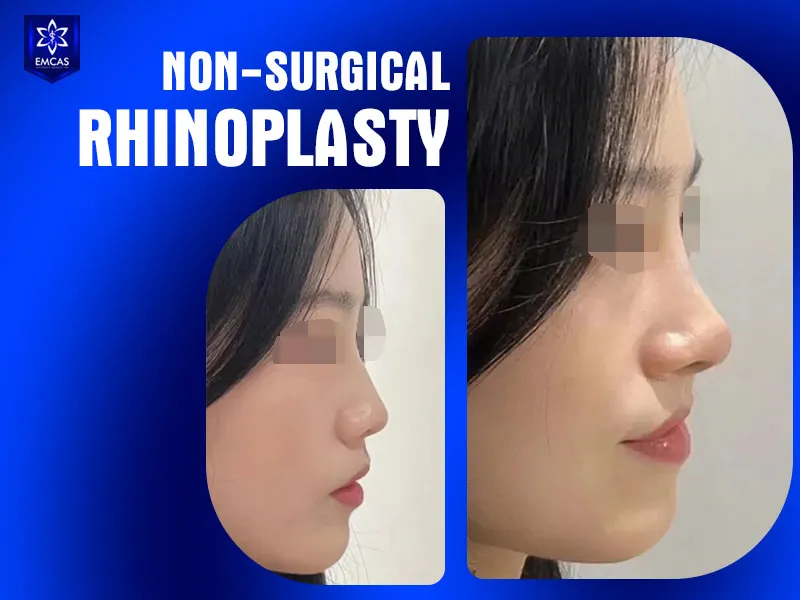
3 common nonsurgical rhinoplasty methods
Several techniques can be used to make relatively subtle changes to the shape of the nose without conventional structural rhinoplasty. Each method uses a different material and has its own characteristics, so the appropriate option depends on the person's anatomy, goals and medical assessment.
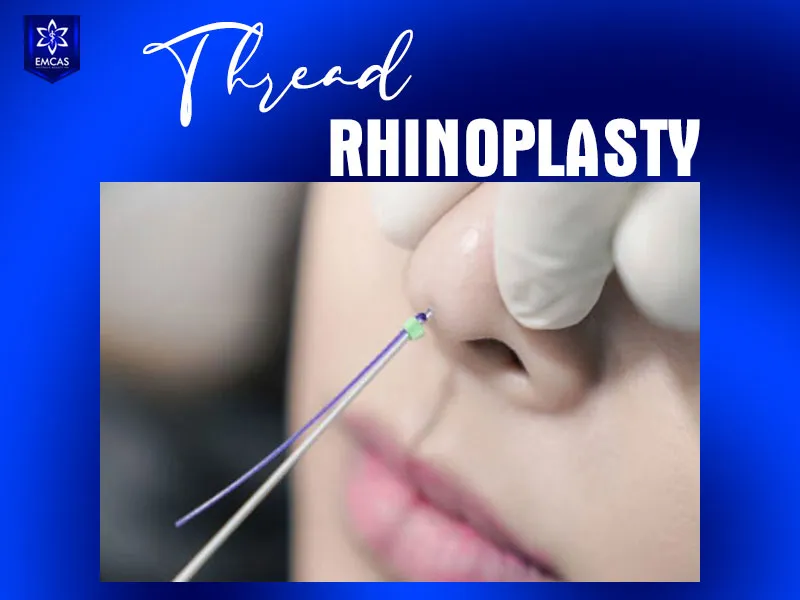
Nose thread lift
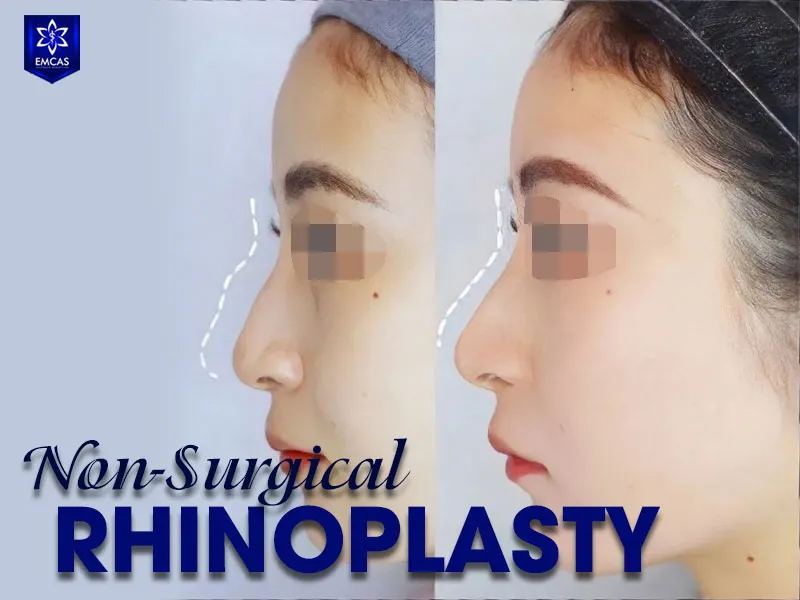
A nose thread lift uses biocompatible threads placed beneath the skin to support and elevate selected areas of the nose, such as the nasal bridge. The doctor creates a small entry point in the nasal area and places the threads beneath the skin to create the intended contour.
In the technique described at EMCAS, a small amount of autologous fat may also be added to create additional fullness around the nasal tip. Because this approach does not involve structural rhinoplasty surgery, the procedure and recovery are generally shorter than with conventional surgery.
The aim is to create subtle elevation and a natural-looking contour that remains harmonious with the face. It may be considered by people who want modest nasal augmentation without structural rhinoplasty.
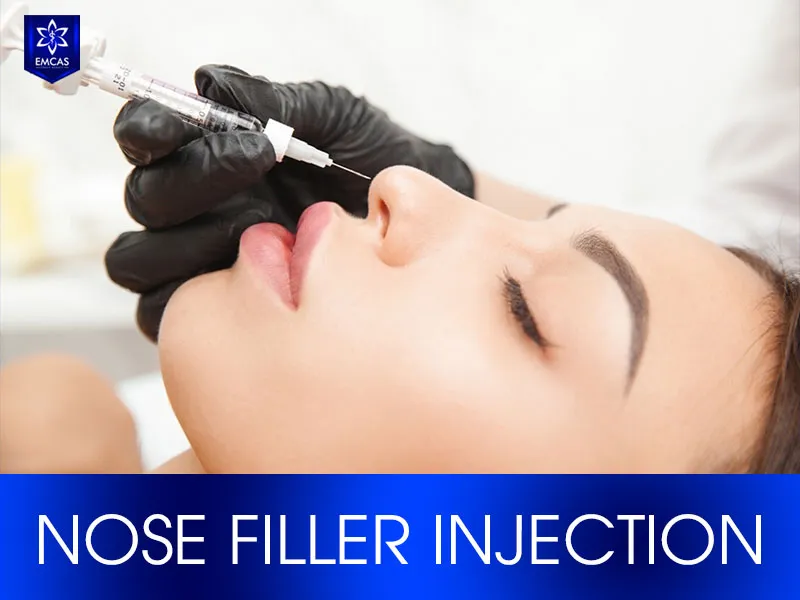
Nose filler injections
Nose filler treatment, often referred to as filler-based or liquid rhinoplasty, uses dermal filler, commonly hyaluronic acid, to add volume to selected areas such as the nasal bridge or tip. The procedure can be performed relatively quickly and generally requires little downtime.
Filler-based nonsurgical rhinoplasty may be considered for relatively minor concerns such as a low nasal bridge, a mild dorsal irregularity or subtle imbalance around the nasal tip. Results are temporary and, according to the treatment information described here, may last approximately 6 to 18 months depending on the filler used and individual factors.
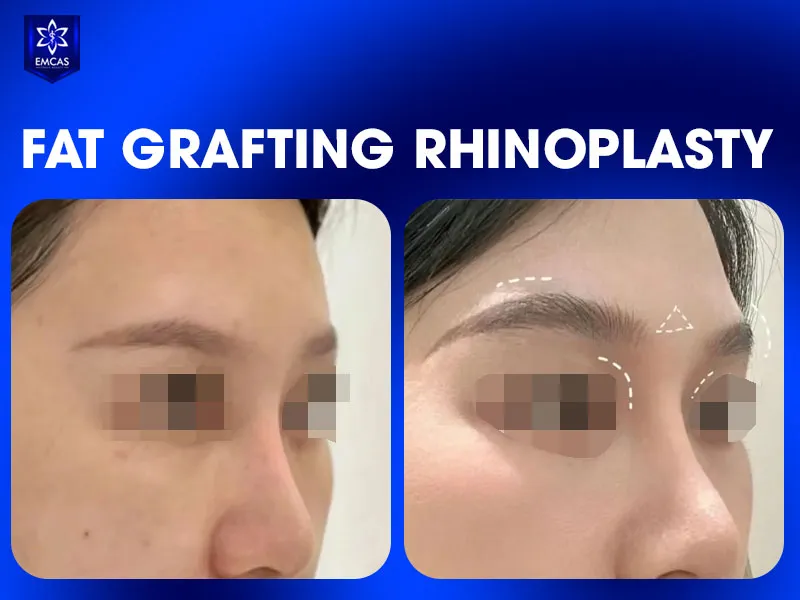
Autologous fat grafting to the nose
Autologous fat grafting uses fat taken from the patient's own body. After processing, the fat is injected into selected areas of the nose to add volume to depressions or subtly increase the height and contour of the nasal bridge. Because the material comes from the patient's own body, it has a high degree of biological compatibility and may reduce the likelihood of an allergic reaction or rejection.
This approach may be considered by people seeking modest nasal augmentation without structural rhinoplasty surgery. A doctor should assess whether it is appropriate for the individual's anatomy and treatment goals.
Who may be a candidate for nonsurgical rhinoplasty?
Nonsurgical rhinoplasty may be considered by people who want relatively subtle changes to the shape of their nose without conventional rhinoplasty surgery. Potential candidates may include:
- People who want a modest improvement rather than major structural correction.
- People who are not ready to commit to surgical rhinoplasty.
- People seeking a temporary or relatively subtle change in nasal contour.
- People who prefer a procedure with less downtime than conventional surgery.
- People whose health status or medical history requires careful assessment before choosing any aesthetic procedure.
Suitability cannot be determined from these criteria alone. A doctor should assess your health, nasal anatomy and treatment goals before recommending a procedure.
Related reading: Common Rhinoplasty Methods and How They Differ
How is nonsurgical rhinoplasty performed?
The exact procedure varies according to the technique and material selected. In general, the treatment process described at EMCAS includes the following steps:
Step 1: Consultation and examination
The doctor first examines the nose and assesses the areas the patient would like to improve. The treatment plan is then considered according to the nasal anatomy and the patient's aesthetic goals.
Step 2: Preparation before treatment
Although these techniques do not involve conventional structural rhinoplasty, an appropriate health assessment is still important before treatment.
The nasal area is cleaned using a medical antiseptic solution. Local anesthesia may then be used according to the selected technique and the doctor's assessment.
Step 3: Performing the nonsurgical rhinoplasty procedure
Depending on the selected method, the doctor may place threads, inject dermal filler or perform autologous fat grafting at the planned treatment areas. The amount and placement are adjusted according to the intended nasal contour and facial proportions.
Step 4: Aftercare
An overnight hospital stay is generally not required after the nonsurgical procedures described here. Once you return home, follow the doctor's instructions for caring for the treated area.
Avoid strong pressure or impact to the nose and attend scheduled follow-up appointments so the doctor can monitor the treatment result.
Related reading: Rhinoplasty Procedure at EMCAS
How to choose a provider for nonsurgical rhinoplasty
Although nonsurgical rhinoplasty does not involve conventional rhinoplasty surgery, choosing an appropriately licensed medical facility and qualified practitioner remains important. The facility should have clear authorization to provide the relevant medical or aesthetic services.
The practitioner should have appropriate training and experience in nasal aesthetic procedures and in the specific technique being considered. For treatments involving threads, autologous fat or dermal fillers, the materials used should also have clear provenance and be appropriate for the intended procedure.
If you are considering nonsurgical rhinoplasty and would like an individual assessment, you can consult the medical team at EMCAS Aesthetic Hospital to discuss your nasal anatomy, aesthetic goals and suitable treatment options.
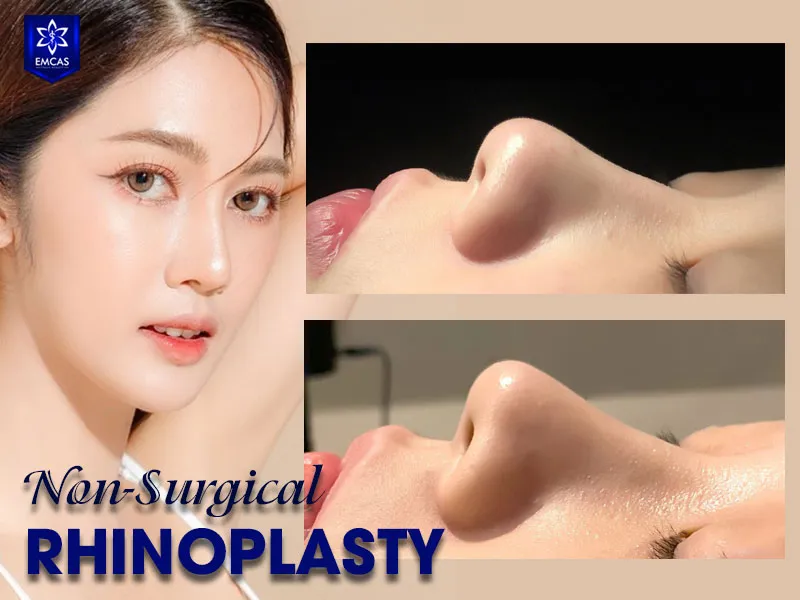
Nonsurgical rhinoplasty may be an option for people who want relatively subtle changes to nasal contour without conventional structural surgery. Because the methods, expected duration and suitability vary, a medical consultation is important before deciding which approach is appropriate.
EMCAS Aesthetic Hospital uses medical equipment to support aesthetic assessment and treatment. The EMCAS medical team continues to update its clinical techniques and technologies with the aim of improving the patient experience.
Related reading: What Is Surgical Rhinoplasty? Cost, Procedure and What to Know
EMCAS AESTHETIC HOSPITAL
Address: 14/27 Hoàng Dư Khương Street, Hòa Hưng Ward, Ho Chi Minh City, Vietnam
Hotline: 0903082836 – 0979223636
Website: https://www.emcas.vn/