



Please fill in the form below !

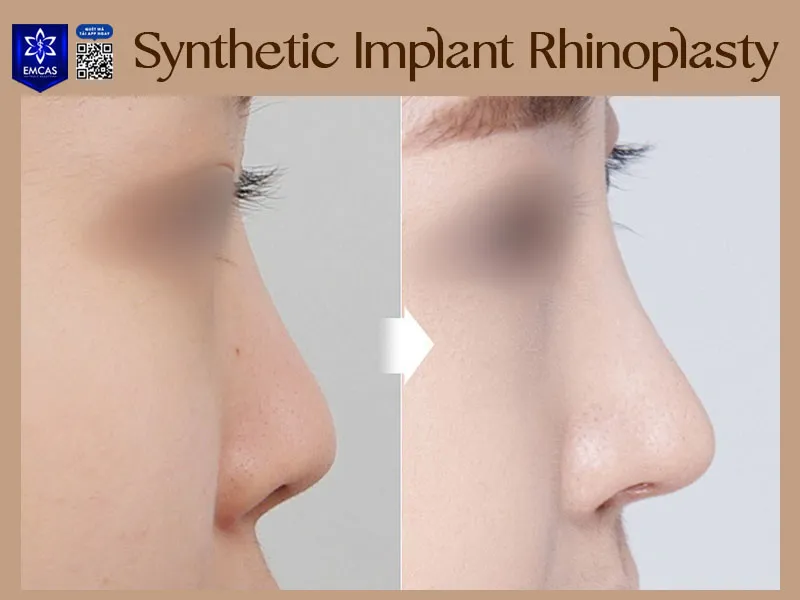
Rhinoplasty with synthetic implants is an option for people who want to increase nasal bridge projection and improve concerns such as a low, short, or upturned nose. Modern nasal implants are available in different materials, shapes, and degrees of flexibility to accommodate different nasal structures and surgical plans.
In this article, EMCAS Aesthetic Hospital explains what rhinoplasty with synthetic implants is, the commonly used types of nasal implants, their potential benefits, cost, and key considerations when choosing a material.
What Is Rhinoplasty With Synthetic Implants?
Rhinoplasty with synthetic implants is an augmentation technique that uses an alloplastic implant to increase the height and projection of the nasal bridge and improve nasal contour in relation to the face. Common options include silicone and ePTFE-based implants such as Surgiform, Nanoform, and Gore-Tex.
Synthetic nasal implants are available in different shapes, sizes, and degrees of flexibility. Depending on the nasal anatomy and surgical plan, the surgeon can shape the implant to fit the bridge. Ear cartilage may also be used to cover or support the nasal tip when additional tip protection or projection is required.
At EMCAS Aesthetic Hospital, stromal vascular fraction (SVF) derived from autologous fat may also be incorporated into selected rhinoplasty protocols to support tissue recovery and healing around the treated area.

5 Potential Benefits of Synthetic Implants in Rhinoplasty
Synthetic implants can provide a practical option for nasal bridge augmentation in appropriately selected patients. Potential advantages include:
-
The procedure may be more affordable than some forms of autologous cartilage rhinoplasty because cartilage does not always need to be harvested from another area of the body.
-
Synthetic implants are available in multiple shapes and sizes and can be selected or shaped according to the nasal structure and intended bridge contour.
-
Medical-grade alloplastic materials used in rhinoplasty are designed for implantation. Their suitability depends on the implant material, surgical technique, nasal anatomy, and individual tissue characteristics.
-
In selected cases, avoiding cartilage harvesting from another body site can reduce additional donor-site surgery. Recovery still varies according to the extent of the rhinoplasty and each patient's healing response.
-
A properly selected and positioned implant can provide stable, long-term nasal bridge support when postoperative care instructions are followed.
For suitable candidates, rhinoplasty with synthetic implants can therefore be considered when the main goal is to increase bridge projection without relying entirely on autologous cartilage. The appropriate material and technique should be selected after an individual assessment by the surgeon.

Common Types of Synthetic Nasal Implants
Several synthetic implant materials and product types are used in augmentation rhinoplasty. Some products may share the same underlying material, such as expanded polytetrafluoroethylene (ePTFE), while differing in their design and physical characteristics.
Common options include:
-
Silicone implants are among the most commonly used synthetic materials for augmentation rhinoplasty. Their firmness and elasticity allow the implant to be shaped for different bridge profiles, including S-line and L-line designs.
-
Surgiform implants have a microporous structure intended to allow surrounding tissue to grow into the material, which can help stabilize the implant after placement. The material can be used to create a softer, more defined nasal bridge contour.
-
Nanoform implants are made from ePTFE and, according to the product information used by EMCAS, originate from the United States. The material is lightweight and designed for nasal augmentation without adding excessive weight to the nasal bridge.
-
Gore-Tex implants are made from ePTFE, a soft and microporous material that can be shaped for nasal augmentation. Its porous structure allows tissue ingrowth, which can contribute to implant stability after placement.
Each implant has different physical characteristics, advantages, and limitations. Selecting the appropriate material should therefore be based on nasal anatomy, the intended degree of augmentation, tissue condition, and the surgeon's treatment plan.
Read more: COMMON RHINOPLASTY TECHNIQUES AND WHAT TO KNOW
How Much Does Rhinoplasty With Synthetic Implants Cost?
At EMCAS Aesthetic Hospital, rhinoplasty with synthetic implants starts from VND 23 million, depending on the implant material and individual treatment plan. A procedure using only a synthetic implant for bridge augmentation may cost less than a treatment plan that also incorporates ear cartilage for tip coverage or SVF technology.
Rhinoplasty prices can also vary between medical facilities and may depend on factors such as the surgical technique, surgeon, implant material, hospital facilities, and postoperative care.
Read more: HOW MUCH DOES RHINOPLASTY COST?
Rhinoplasty With Synthetic Implants at EMCAS Aesthetic Hospital
If you are considering rhinoplasty with synthetic implants, choosing a licensed medical facility and an experienced surgical team is an important part of treatment planning. EMCAS Aesthetic Hospital has operated in aesthetic surgery for more than 10 years and is supported by an experienced medical team and hospital-based facilities.
At EMCAS, the surgeon assesses your nasal structure, aesthetic goals, and individual condition before recommending a rhinoplasty technique or implant material. Hospital facilities and services include:
-
Diagnostic and imaging equipment including a 128-slice CT scanner, 3.0 Tesla MRI system, Morpheus 3D, and VECTRA 3D imaging.
-
Sterile operating rooms operated according to medical standards.
-
A medical team with experience in aesthetic and reconstructive procedures that continues to update its clinical knowledge and surgical techniques.
-
An in-house laboratory system supporting hospital care.
-
SVF technology derived from autologous fat for selected treatment protocols.
-
Transportation support for eligible patients in Ho Chi Minh City and surrounding provinces.

Frequently Asked Questions About Rhinoplasty With Synthetic Implants
Is rhinoplasty with a synthetic implant permanent?
Rhinoplasty with a synthetic implant should not be considered permanently guaranteed. The Vietnamese source for this article states that results may last around 15–20 years. Actual longevity can vary depending on the implant material, surgical technique, nasal tissues, postoperative care, and individual circumstances.
Should I choose a synthetic implant or autologous cartilage for rhinoplasty?
The choice between a synthetic implant and autologous cartilage depends on your goals, nasal anatomy, current nasal condition, and budget. Each option has different advantages and limitations, so the material should be selected after consultation and examination by a qualified surgeon.
In summary, rhinoplasty with synthetic implants can be considered for people who want to increase nasal bridge projection using a medical-grade implant. Understanding the available implant materials, their characteristics, cost, and limitations can help you have a more informed discussion with your surgeon. Contact EMCAS Aesthetic Hospital for an individual assessment and treatment recommendation.
EMCAS AESTHETIC HOSPITAL
Address: 14/27 Hoàng Dư Khương Street, Hòa Hưng Ward, Ho Chi Minh City, Vietnam
Hotline: 0903082836 – 0979223636
Website: https://www.emcas.vn/