


Please fill in the form below !

The choice of grafts and implants plays an important role in the contour and support of the nose after rhinoplasty. However, the available materials differ in composition, potential benefits and limitations. In this guide, EMCAS Aesthetic Hospital compares four commonly discussed options—Surgiform, MegaDerm, ear cartilage and rib cartilage—to help you prepare for a discussion with your surgeon.
What Are Rhinoplasty Graft Materials?

Rhinoplasty graft materials are used to reshape, augment or support the nose during surgery. Depending on the treatment plan, a surgeon may use cartilage harvested from the patient, a manufactured implant, or a processed tissue-derived graft. Different materials can serve different purposes, including bridge augmentation, nasal tip support and structural reconstruction.
No single material is best for every patient. The choice depends on nasal anatomy, skin and soft-tissue condition, previous surgery, the intended correction and the surgeon's assessment of the risks and benefits.
Main Categories of Rhinoplasty Grafts and Implants
Rhinoplasty materials can be understood in three groups: autologous cartilage, synthetic implants and processed human-derived tissue grafts. The first two groups are often discussed together, but MegaDerm belongs to the third group; it is not cartilage or a synthetic silicone implant.
1. Autologous Cartilage Grafts
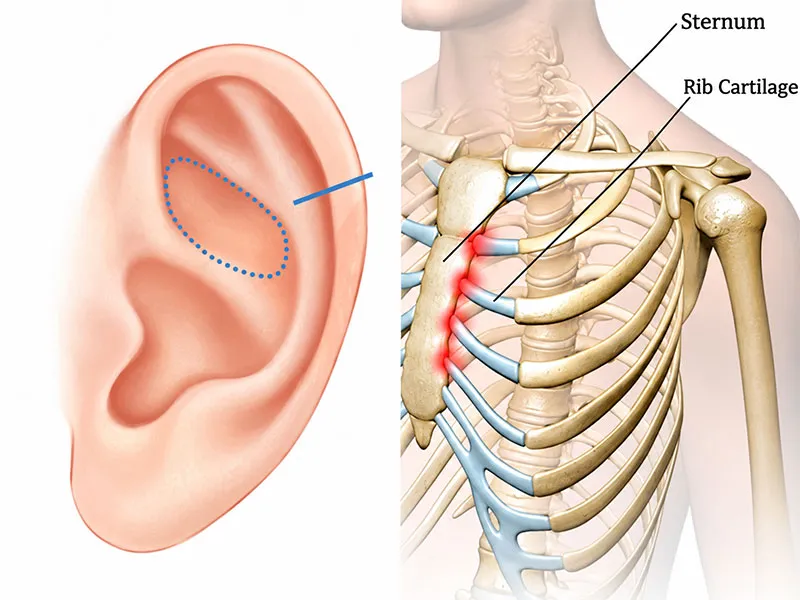
Autologous cartilage is taken from the patient's own nasal septum, ear or rib. The surgeon harvests, prepares and shapes the cartilage according to the reconstruction or augmentation required. Because it comes from the patient, it generally offers good tissue compatibility, although harvesting and implantation still involve surgical risks.
Potential advantages:
- Good biological compatibility because the graft comes from the patient.
- Can provide support and contour stability when appropriately selected and shaped.
- May create a natural feel and contour in selected areas.
Limitations:
- The available amount of cartilage is limited by the donor site.
- Harvesting cartilage adds a surgical step and may create donor-site discomfort or scarring.
- Treatment may be more complex and costly than some implant-only approaches.
2. Synthetic Nasal Implants
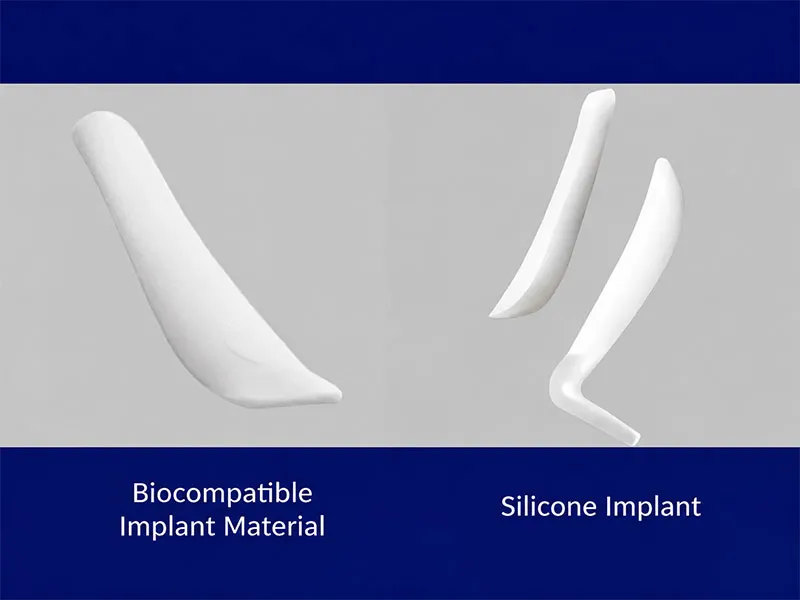
Synthetic nasal implants include materials such as medical-grade silicone and expanded polytetrafluoroethylene (ePTFE). They are manufactured in different shapes and sizes for selected augmentation procedures. Their suitability and safety depend on the specific product, surgical placement and patient factors; possible complications include infection, displacement, visibility or extrusion.
Potential advantages:
- Available in a range of shapes, sizes and profiles.
- Does not require harvesting cartilage from a separate donor site.
- May be less expensive than some autologous graft procedures.
Limitations:
- Possible complications include infection, capsule formation, displacement or extrusion.
- Tissue integration varies with the implant material and placement.
- Some implants can feel firmer or become visible under thin skin.
3. Human-Derived Dermal Matrix
Acellular dermal matrix (ADM), including MegaDerm, is processed from donated human skin tissue. It is a separate category from both autologous cartilage and manufactured implants, and may be used for selected soft-tissue coverage or reconstruction. It also has limitations, including the possibility of partial resorption.
Four Common Rhinoplasty Graft Materials
Four materials commonly discussed in rhinoplasty are outlined below. They are not ranked from best to worst: each has different properties and potential uses.
1. Surgiform (ePTFE Implant)

Surgiform is a facial implant material made from expanded polytetrafluoroethylene (ePTFE), rather than cartilage. ePTFE is used in several medical applications. The U.S. FDA granted 510(k) clearance to Surgiform Augmentation Material (K021889) for specified plastic and reconstructive surgery indications; this is not a guarantee that every use or patient outcome is risk-free.
The material has a microporous structure that may support tissue ingrowth and help the implant remain in position. Its flexibility allows it to be shaped for selected nasal bridge procedures. However, implant visibility, infection, displacement and other complications remain possible, so material choice and surgical technique are important.
2. MegaDerm (Acellular Dermal Matrix)
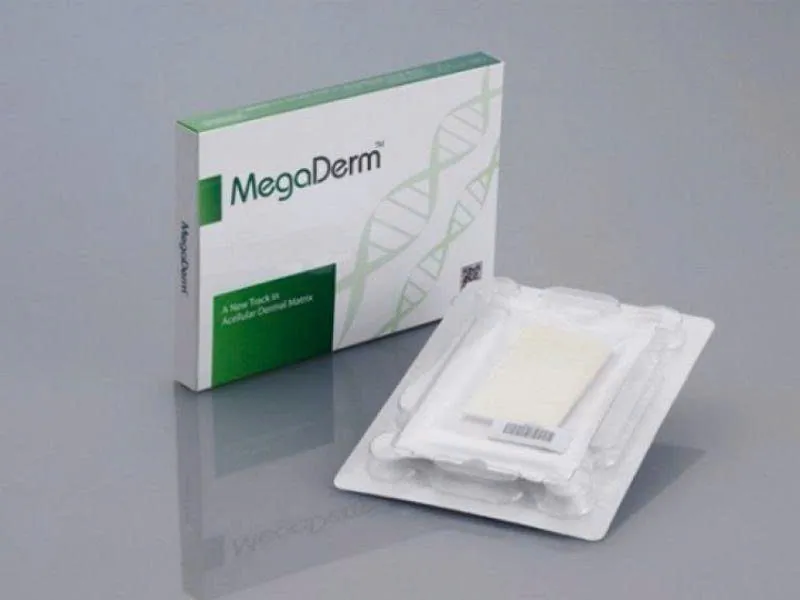
MegaDerm is a human-derived acellular dermal matrix (ADM), not cartilage. It is produced from donated human dermal tissue that has been processed to remove cellular components. In rhinoplasty, a dermal matrix may be considered for selected soft-tissue coverage or contour-support needs.
MegaDerm may be considered in some revision procedures or when additional tissue coverage is needed over an implant. The potential benefit is related to its tissue-derived matrix, but results can vary and the material may change or partially resorb over time. It should not be assumed to eliminate redness, allergic reactions or other complications.
3. Ear (Auricular) Cartilage
Ear cartilage rhinoplasty uses cartilage harvested from the patient's auricle (outer ear), also called auricular or conchal cartilage. It is a commonly considered autologous graft option, particularly for selected nasal tip procedures.
Because the graft comes from the patient's own tissue, it avoids exposure to a synthetic implant at the grafted site and generally provides good biocompatibility. It can be shaped to provide coverage or contour adjustment, although infection, graft changes and other surgical complications are still possible.
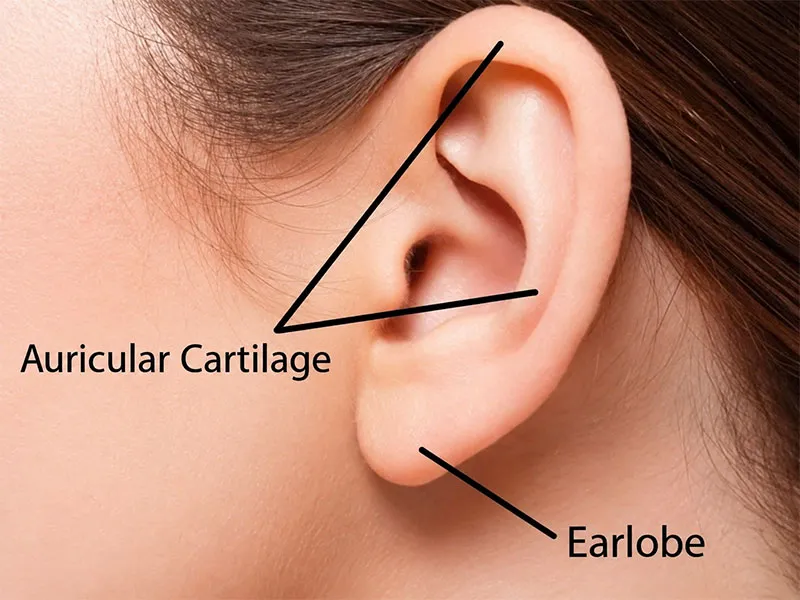
Auricular cartilage is relatively flexible and has a natural curve. These properties can be useful for nasal tip shaping and coverage, but the available amount and strength may not be sufficient for more extensive structural reconstruction. The incision used to harvest cartilage is typically planned in a less visible part of the ear.
Harvesting ear cartilage requires an additional surgical site and may increase procedural complexity. Cartilage curvature or changes in graft shape can also affect the outcome over time. The surgeon must account for the graft's characteristics, the planned placement and the patient's anatomy.
4. Rib (Costal) Cartilage
Rib cartilage, also called costal cartilage, may be used when rhinoplasty requires a larger amount of autologous graft material or stronger structural support. Depending on the procedure, cartilage may be harvested from the fifth through ninth rib region, with the precise donor site determined by the surgeon. It is particularly relevant to some complex primary or revision rhinoplasty procedures.
Potential benefits of costal cartilage include:
- Can provide substantial structural support for selected nasal augmentation or reconstruction needs.
- Uses the patient's own cartilage rather than introducing a synthetic graft at the reconstructed site.
- Allows the surgeon to shape a larger cartilage graft when extensive correction is required, but adds a donor-site operation.
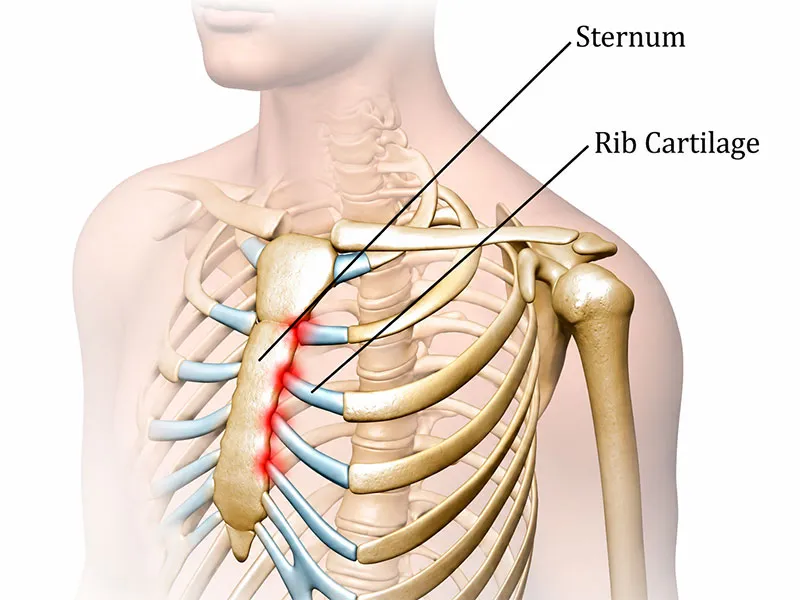
After individual assessment, a surgeon may consider rib cartilage for suitable adults in good general health who have one or more of the following nasal concerns:
- A short, crooked or upturned nose, or insufficient native structural support.
- Previous rhinoplasty procedures that have weakened the nasal tip or septal framework.
- Nasal contracture or tissue damage following an earlier operation.
- Visible implant contour, bridge redness or other concerns requiring evaluation.
- A suspected inflammatory reaction or complication involving an earlier implant.
How to Choose a Suitable Rhinoplasty Material

Begin with the nasal feature you want to change and the extent of correction required. The following examples are starting points for consultation, not prescriptions for a particular material:
- For greater nasal bridge projection, a surgeon may discuss a silicone or ePTFE implant and assess whether additional coverage is needed. MegaDerm may be considered for selected soft-tissue needs; it is not a substitute for structural cartilage in every case.
- For nasal tip refinement or structural support, the surgeon may consider auricular or costal cartilage, depending on the amount and strength of graft material required.
Your medical history, tissue condition and any previous rhinoplasty procedures also matter:
- If you have a history of allergies or previous implant complications, tell your surgeon. Autologous cartilage may be considered, but no material is free of risks.
- If you have not undergone rhinoplasty before, several material options may still be available; suitability depends on examination and the intended correction.
Cost is another consideration. Procedures using autologous cartilage may cost more because they involve graft harvesting and additional operative steps. The final decision should also consider safety, the surgeon's experience and the expected role of each material—not price alone.
Rhinoplasty Consultation at EMCAS Aesthetic Hospital
Choosing an appropriately licensed surgical facility and an experienced clinician is an important part of rhinoplasty planning. At EMCAS Aesthetic Hospital, one available approach is SVF rhinoplasty, which combines selected conventional rhinoplasty components with stromal vascular fraction (SVF) derived from the patient's own fat.
Depending on the surgical plan, EMCAS may use a synthetic implant for the nasal bridge, auricular cartilage to support or cover the nasal tip, and a dermal-fat layer for additional tissue coverage. SVF may then be used as an adjunct under the hospital's treatment protocol.
Ear cartilage is relatively soft and flexible, allowing the surgeon to shape it for selected nasal tip applications. When appropriately used, it may help create a smoother and more natural-looking nasal tip contour.
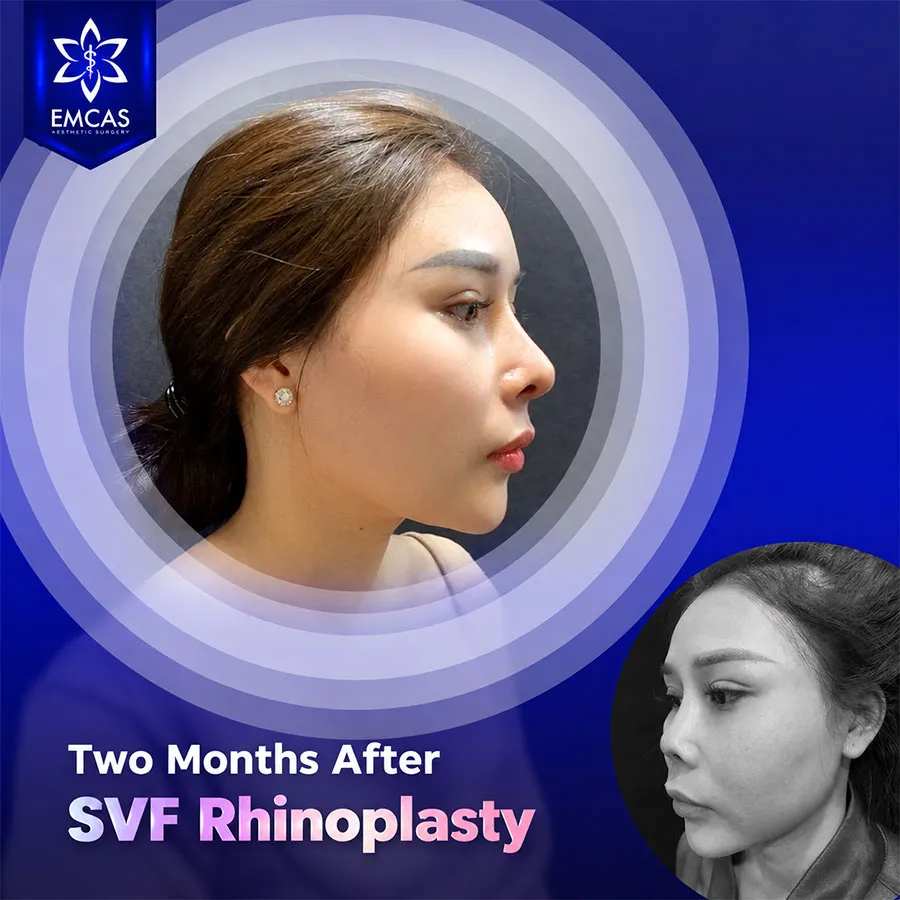
Fat may be harvested from an area such as the abdomen, thighs or hips and processed to isolate SVF. At EMCAS, SVF is incorporated into selected treatment plans with the aim of supporting tissue recovery. Its use does not replace the need for standard surgical assessment and does not guarantee faster healing or a particular aesthetic result.
The EMCAS medical team provides consultation, surgical planning and postoperative follow-up for patients considering rhinoplasty. Risks, recovery and the expected outcome depend on the individual patient and the procedure performed.
If you would like to learn more about SVF rhinoplasty or other nasal reshaping options, contact EMCAS Aesthetic Hospital to arrange an assessment and discuss which surgical plan may be appropriate for you.
Understanding these four materials can help you ask more informed questions before rhinoplasty surgery. The most suitable graft or implant depends on your nasal framework, skin and soft-tissue condition, medical history and the qualified surgeon's evaluation.
EMCAS AESTHETIC HOSPITAL
Address: 14/27 Hoang Du Khuong Street, Hoa Hung Ward, Ho Chi Minh City, Vietnam
Hotlines: 0903 082 836 – 0979 223 636
Website: https://www.emcas.vn/en
