


Please fill in the form below !

A swollen or bulbous-looking nasal tip is a common concern after rhinoplasty, especially when the nose still looks larger than expected after one month. Tip swelling often improves gradually over approximately 3–6 months, although the time needed for the final contour to emerge varies from person to person and may be longer. This guide from EMCAS Aesthetic Hospital explains the possible reasons, recovery timeline, aftercare precautions, and signs that warrant a medical assessment.
Is It Normal for the Nose Tip to Still Look Bulbous After One Month?
After rhinoplasty surgery, the body begins healing the tissues affected by the procedure. Swelling and temporary fluid retention are expected parts of early recovery and may be particularly noticeable around the nasal tip.
If the tip is still enlarged, feels tight, or has not softened completely after one month, this does not necessarily mean something has gone wrong. The tip can take longer to settle than other parts of the nose, and the healing pattern depends on the procedure and the patient's tissues.
Some structural rhinoplasty techniques involve cartilage grafting or additional support around the tip. The resulting tissue changes may make swelling more apparent and prolong the period needed for the tip to develop a more settled appearance.
Mild swelling that gradually improves, without increasing pain, marked redness, unusual discharge, or an unpleasant odor, may be consistent with normal healing. However, rapidly worsening swelling, pronounced redness, increasing pain, drainage, or changes in skin color should be assessed promptly by your surgeon because they may indicate a complication such as infection or a fluid collection.

Why Does the Nose Tip Look Swollen After Rhinoplasty?
A larger-looking nasal tip during the first few weeks after surgery is often related to postoperative swelling in the soft tissues. This can make the tip appear rounder or less defined than the planned result.
Several factors can contribute to this temporary appearance:
- Normal tissue healing: The body's healing response brings increased blood flow and fluid to the operated tissues. Swelling may remain noticeable around the nasal tip for longer than it does along the bridge.
- Postoperative fluid and bruising: Small amounts of fluid and blood associated with surgery can contribute to early fullness and swelling. A distinct or worsening fluid collection is not something to diagnose at home and should be checked by the surgical team.
- Postoperative care and activity: Sleeping in a position that presses on the nose, frequent bending, or returning to strenuous activity too early may aggravate swelling or interfere with the recommended recovery precautions. Follow any specific dietary advice given by your surgeon rather than assuming that particular foods cause nasal tip swelling in everyone.
Related reading: Signs of Fluid Buildup After Rhinoplasty
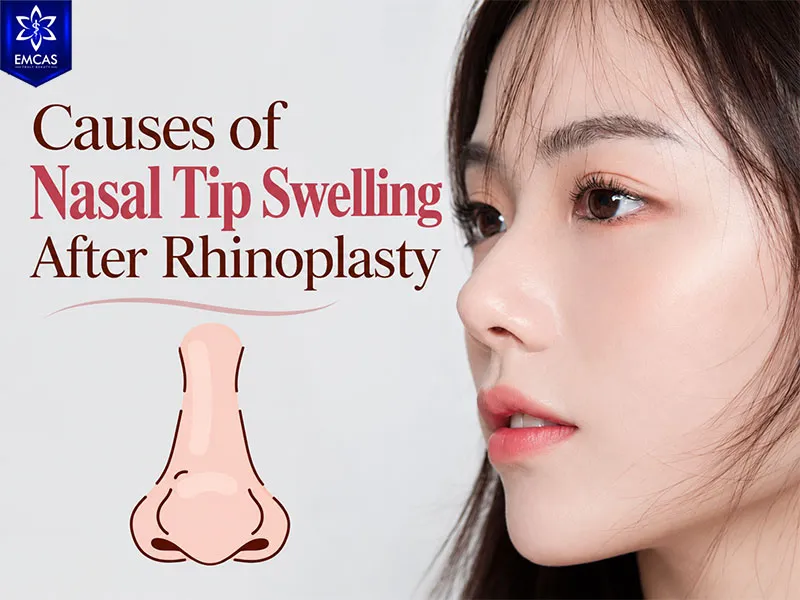
How Long Does Nose Tip Swelling Last After Rhinoplasty?
Many people begin to question the shape of their nasal tip around the third or fourth week, when the initial bruising has eased but the tip may still look fuller than expected.
There is no single recovery deadline for everyone. During approximately 3–6 months after rhinoplasty, the nasal tip may become progressively less swollen and the overall contour more defined. Healing depends on individual tissue response, skin thickness, surgical technique, and postoperative care. Subtle swelling and tip refinement can continue beyond this period, so a one-month appearance should not be treated as the final result.
Related reading: How Long Does Rhinoplasty Take?
How to Support Recovery and Manage Nasal Tip Swelling
A puffy nasal tip can be part of the expected recovery process. Following your surgeon's postoperative plan can help protect the healing tissues and avoid unnecessary pressure or irritation.
General rhinoplasty aftercare measures may include:
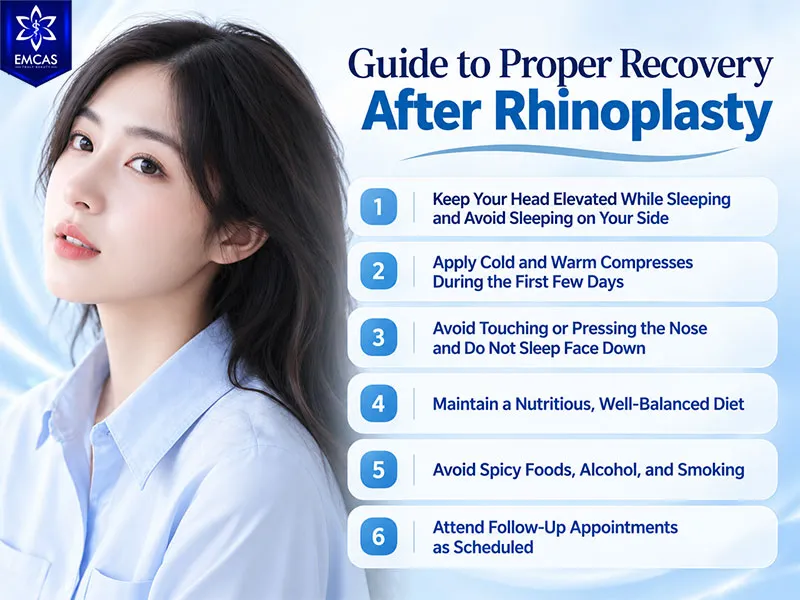
- Sleep on your back with your head elevated during early recovery, and avoid positions that put pressure on the nose.
- If your surgeon recommends it, use a gentle cold compress during the first 2–3 days. Use a warm compress later only with your medical team's approval, and never apply heat or ice directly to the operated nose.
- Do not massage, squeeze, or press on the nose, and avoid sleeping face down.
- Eat a balanced diet and maintain adequate nutrition to support tissue healing.
- Follow any food restrictions provided by your surgeon. Avoid alcohol, smoking, and other substances your medical team advises you to avoid during recovery.
- Attend scheduled follow-up appointments, and report swelling that worsens or is accompanied by other unusual symptoms.
Related reading: Rhinoplasty Aftercare: A Recovery Guide
Frequently Asked Questions About Rhinoplasty Recovery
When Will My Nose Look More Natural After Rhinoplasty?
Bruising and more noticeable swelling often start to improve within 7–10 days. However, the nose may continue changing over approximately 3–6 months as the tissues settle. The final appearance can take longer, depending on the procedure and individual healing.
When Can I Touch My Nose After Rhinoplasty?
Although the nose may feel more stable after around one month, avoid unnecessary pressure or manipulation. Touch the area gently only as needed for cleaning or care according to your surgeon's instructions. More complete settling may take approximately 3–6 months or longer.
When Does Swelling Completely Go Away After Rhinoplasty?
The most noticeable swelling often decreases during the first 7–10 days and continues improving over the following weeks. Many people look less swollen after about one month, but this does not mean all swelling has disappeared. Residual swelling, particularly at the tip, can persist for several months.
How Long Does Rhinoplasty Take to Heal Fully?
The incisions may be healing well and bruising may be noticeably reduced after about 7–10 days; any suture removal depends on the technique and the surgeon's instructions. Changes in nasal contour continue over the next 3–6 months, and the final result may take longer to become apparent.
When Will My Nose Feel Softer After Rhinoplasty?
The nose may initially feel firm or tight because the surrounding tissues are still healing. Some people begin noticing that it feels softer within approximately 3–6 weeks. The pace varies, and you should not massage the tip to make it soften faster unless your surgeon specifically advises it.
In summary, nose tip swelling after rhinoplasty can persist for weeks or months, and a fuller tip at one month does not automatically indicate a poor result. What matters is whether recovery is progressing as expected and whether any warning signs develop. A follow-up examination is the best way to assess concerns about your individual healing.
At EMCAS Aesthetic Hospital, postoperative monitoring and follow-up care are part of the rhinoplasty process. If you are concerned about persistent nasal tip swelling or your recovery, contact the EMCAS medical team for an assessment and guidance.
EMCAS AESTHETIC HOSPITAL
Address: 14/27 Hoàng Dư Khương Street, Hòa Hưng Ward, Ho Chi Minh City, Vietnam
Hotline: 0903082836 – 0979223636
Website: https://www.emcas.vn/en
