


Please fill in the form below !

Alar base reduction is a focused cosmetic procedure used to narrow a wide or flared nasal base and improve the proportion of the nose in relation to the face. Wide or prominent alae are a common aesthetic concern among Asian patients and can affect facial balance even when the nasal bridge is already well defined. In this guide, EMCAS Aesthetic Hospital explains what alar base reduction involves, recovery, cost, candidacy and key considerations before surgery.
What Is Alar Base Reduction?
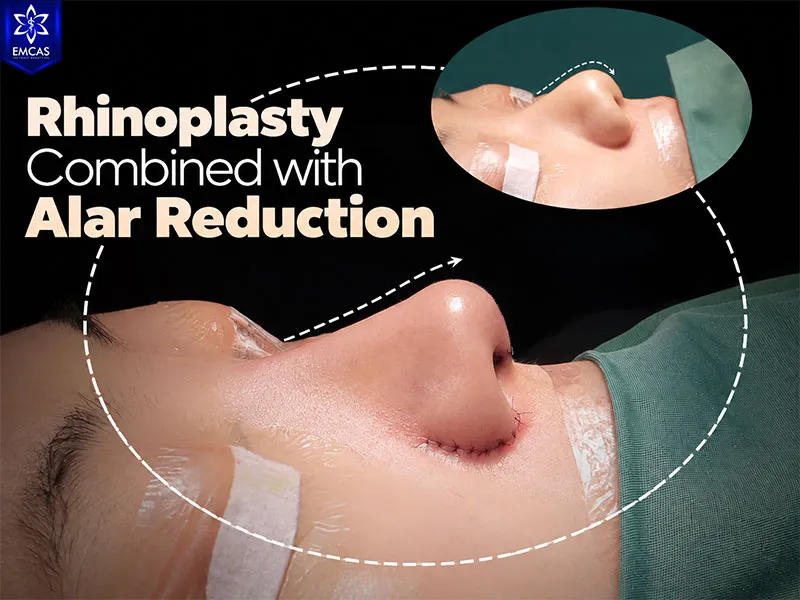
Alar base reduction, also called alarplasty or nostril reduction surgery, is a procedure that reshapes a wide, thick or flared nasal base so the lower part of the nose appears narrower and more proportionate to the face. It may be considered for people with broad alae, thick alar tissue or nostrils that flare noticeably to the sides.
Read more: What Is Rhinoplasty? Cost, Procedure, Recovery & Risks
The technique is selected according to the patient’s nasal anatomy, alar thickness and the specific concern being addressed:
- Alar excision: This approach may be used when the alar tissue is thick and extends laterally. The surgeon makes a small incision near the alar-facial crease, removes a planned amount of excess tissue and then closes the incision with cosmetic sutures.
- Alar base cinching or inward repositioning: This approach may be considered when the alae are relatively thin but the nostrils appear wide or flared. The tissue at the alar base is repositioned inward to narrow the nostril base without removing the same amount of external alar tissue.
How Long Does Alar Base Reduction Take to Look Natural?
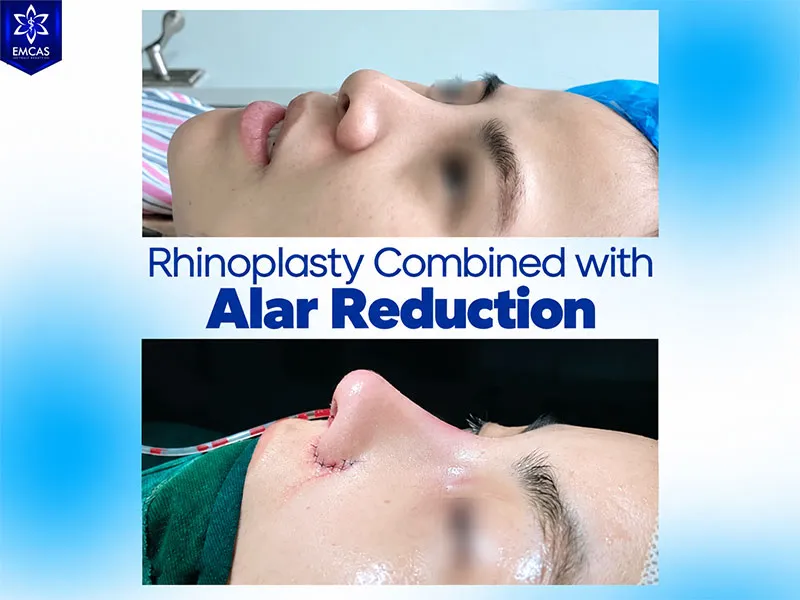
After alar base reduction, swelling commonly begins to improve within about 7–10 days, and the nose may start to look more settled after around one month. The exact recovery timeline varies according to individual healing, the technique used and postoperative care. For many patients, the alar area continues to refine over approximately 1–3 months.
The goal of surgery is to create a narrower, more balanced nasal base while preserving normal nasal function and the underlying nasal framework. Alar base reduction may be considered as a more limited procedure for patients whose main concern is the width or flare of the nostrils rather than the overall nasal structure.
How Much Does Alar Base Reduction Cost?
At EMCAS Aesthetic Hospital, alar base reduction starts from VND 12 million. The final cost can vary depending on the technique selected, the complexity of the case, the surgeon’s assessment and the individual nasal anatomy.
For an exact quotation, contact EMCAS for an in-person assessment and an individualized surgical plan.
Who May Be a Candidate for Alar Base Reduction?
Not everyone needs alar excision or alar base narrowing. The procedure may be considered in cases such as:
- A wide or flared nasal base that appears out of proportion with the face: Broad alae can make the lower part of the nose look wider, particularly from the front.
- Thick alar tissue: In some patients, the alae remain broad even after bridge augmentation. Reducing or repositioning the alar tissue may help create a more proportionate nasal base.
- Asymmetry between the two alae: Congenital anatomy or previous nasal surgery may leave the two sides uneven. Alar base correction may be used to improve symmetry where appropriate.
- Alar base reduction combined with rhinoplasty: Some patients may benefit from narrowing the nasal base as part of a broader rhinoplasty plan when the bridge, tip and alar proportions need to be addressed together.
Read more: Nasal Tip Reduction Surgery: A Guide to Refining a Broad Nasal Tip

Does Alar Base Reduction Affect Face Reading or Fortune?
Some people, particularly in East Asian cultures, consider traditional face-reading beliefs before changing the shape of the nose. In traditional physiognomy, the alae are sometimes associated with ideas about wealth, financial management and later-life fortune.
These interpretations are cultural beliefs rather than scientific predictions. There is no medical evidence that narrowing the alar base changes a person’s intelligence, career, finances or destiny.
1. Medical and aesthetic perspective: Alar base reduction is intended to modify soft tissue around the lower nasal base. When appropriately planned and performed, the aesthetic goals may include:
-
Creating better proportion between the nose and the rest of the face
-
Improving symmetry or reducing visible alar flare
-
Helping the lower nasal contour appear more refined while maintaining an individualized appearance
2. Traditional face-reading perspective: Interpretations of nose shape vary between traditions and should not be treated as medical or scientific guidance. If traditional beliefs are personally important to you, they can be discussed as part of your aesthetic preferences, but surgical planning should still be based on nasal anatomy, facial proportions and medical assessment.
If the width or shape of your alae affects how you feel about your facial proportions, a consultation can help determine whether alar base reduction is appropriate and what degree of change may look natural for your face.
Choosing a Provider for Alar Base Reduction
Although alar base reduction is a relatively focused nasal procedure, surgical planning and technique matter. Excessive or poorly positioned tissue removal can lead to visible scarring, asymmetry or an unnatural nostril shape. Choosing an appropriately licensed medical facility and a surgeon experienced in nasal surgery is therefore an important part of treatment planning.
In Ho Chi Minh City, EMCAS Aesthetic Hospital provides rhinoplasty and related nasal procedures, including alar base correction. Factors patients may consider when evaluating EMCAS include:
- EMCAS operates as a specialty hospital for aesthetic surgery under a Ministry of Health license. Its rhinoplasty procedure includes consultation, preoperative assessment, surgical planning, the procedure itself and postoperative follow-up within a hospital setting.
- EMCAS uses diagnostic, imaging and surgical-support equipment to assist with examination, preoperative assessment and aesthetic surgery.
- The EMCAS medical team has experience in aesthetic nasal surgery, including rhinoplasty, alar base correction, nasal tip refinement and revision procedures.
- Treatment planning is individualized according to nasal anatomy and facial proportions, with the aim of creating a balanced result that remains consistent with the patient’s facial features.
- Postoperative care includes follow-up instructions and scheduled review according to the patient’s recovery plan.

Alar base reduction can improve the proportion of a wide or flared nasal base and create a more balanced relationship between the nose and the rest of the face. Because the appropriate technique and degree of narrowing depend on individual anatomy, treatment should be planned with a qualified surgeon at an appropriately licensed medical facility.
If you are considering alar base reduction, contact EMCAS Aesthetic Hospital for a one-on-one consultation and an individualized treatment plan based on your nasal anatomy and aesthetic goals.
EMCAS AESTHETIC HOSPITAL
Address: 14/27 Hoang Du Khuong Street, Hoa Hung Ward, Ho Chi Minh City, Vietnam
Hotline: 0903082836 – 0979223636
Website: https://www.emcas.vn/en